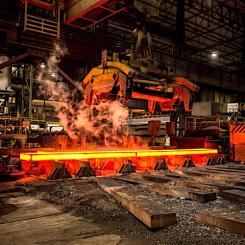
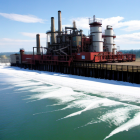

The steel industry is responsible for approximately 11 per cent of global carbon dioxide emissions, making it one of the world's largest single sources of greenhouse gases. At the same time, steel demand continues to grow, raising concerns that emissions could increase further in the coming decades.
However, a new Nordic report suggests that companies purchasing large volumes of steel have significant opportunities to accelerate the transition toward lower-emission production.
The Sustainable Steel Scoreboard assessed 15 Nordic companies with substantial steel consumption. According to the report, demand for low-carbon steel could triple if all companies adopted the procurement practices already implemented by the industry's top performers.
Currently, the companies evaluated meet only 23 per cent of the requirements needed to align with the goals of the Paris Climate Agreement. If best practices were adopted across the board, that figure would rise to 83 per cent.
Purchasing Decisions Can Shape the Market
The report highlights that steel buyers play a crucial role in driving the transition to lower-emission production.
By sending clear signals to suppliers through procurement requirements, companies can create the demand needed to justify investments in near-zero-emission steel manufacturing.
Progress toward more sustainable steel production has largely stagnated globally over the past two years. The report argues that Nordic companies are in a unique position to influence the pace of change by strengthening sustainability requirements throughout their supply chains.
If all 15 companies included in the assessment adopted the most ambitious procurement practices, investments in low-carbon steel production across Northern Europe could increase significantly. Such a development would also strengthen the competitive position of Nordic steel producers.
Swedish Firms Dominate the Ranking
This year's report is the first to include companies from across the Nordic region rather than focusing solely on Finland. As a result, the average score increased from 13 per cent in previous assessments to 25 per cent.
Swedish and Danish companies generally performed substantially better than their Finnish counterparts when it came to sustainable steel procurement.
The highest-ranked company was Swedish bearing manufacturer SKF, which achieved a score of 65 per cent in the category measuring responsible steel sourcing. The company was highlighted as an example of how industrial buyers can use their purchasing power to influence change throughout supply chains.
According to the report, a perfect score would indicate full alignment with the Paris Agreement while also meeting environmental criteria related to air pollution, water use and deforestation. This includes commitments to procure near-zero-emission steel by 2040 and requirements for suppliers to adopt science-based climate targets.
Valmet Leads Finland While Kone Disappoints
Among Finnish companies, Valmet achieved the strongest result. The company improved its score from 17 per cent last year to 32 per cent in this year's ranking, placing fifth overall.
Kone performed significantly worse, receiving only 11 per cent despite recently identifying climate action as one of its key strategic priorities.
In the broader category measuring overall sustainability performance, Metso ranked highest among the Finnish companies included in the report.
The findings suggest that companies in Finland and Norway are still addressing sustainability challenges at a more general level, while firms in Sweden and Denmark have increasingly focused on steel procurement and supply-chain emissions.
Consumers Yet to Drive Demand
Another notable finding concerns household appliance manufacturer Electrolux.
The company received a score of 22 per cent in the sustainable steel procurement category, close to the overall average. However, Electrolux also recorded the lowest score among all companies in the broader sustainability assessment.
According to the report's authors, this may reflect the fact that consumers continue to focus primarily on the energy efficiency of products rather than the environmental impact of the materials used to manufacture them.
As a result, there is still limited market pressure for appliance manufacturers and other consumer goods producers to increase their use of low-carbon steel.
Source: Sustainable Steel Scoreboard
Fact Check:
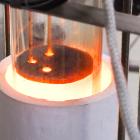
Low-carbon and fossil-free steel is produced using technologies that reduce or eliminate the use of coal in the steelmaking process. Several Nordic initiatives, including Swedish investments in hydrogen-based direct reduction of iron ore, have attracted international attention as potential pathways to cleaner steel production.
However, production volumes remain limited, and costs are still significantly higher than for conventional steel. This means that demand from industrial buyers will play a decisive role in determining how quickly low-carbon steel can become commercially viable and widely adopted.