

China has escalated its trade dispute with Japan by freezing exports of so-called dual-use materials to 20 Japanese companies and placing another 20 on a newly created watchlist. The move, announced by China’s Ministry of Commerce on Tuesday, immediately affects subsidiaries of Mitsubishi Heavy Industries as well as automakers Subaru and Hino Motors.
Beijing justified the decision as an effort to curb Japan’s “remilitarization” and alleged “nuclear ambitions.”
Among the affected materials are critical minerals such as gallium, germanium, antimony, and graphite, as well as rare-earth elements — raw materials essential for semiconductors, electric vehicles, defence systems, and renewable energy technologies. China currently dominates global processing capacity for many of these materials.
Tensions After Takaichi Election Victory
The latest measures come after the decisive election victory of Prime Minister Sanae Takaichi earlier this month. During the campaign, Takaichi raised the possibility of revising Japan’s pacifist constitution.
Relations between Beijing and Tokyo had already deteriorated in November, when Takaichi described a potential Chinese invasion of Taiwan as an existential threat to Japan and suggested that military force could be considered in response.
For Japan, the export freeze was not entirely unexpected. China had already announced stricter export controls last month. Akira Igata, head of the Economic Security Intelligence Lab at the University of Tokyo, described the new restrictions as a “moment of truth” for Japanese firms that have recently established dedicated units to prepare for supply chain disruptions.
Deep-Sea Mining as Strategic Plan B
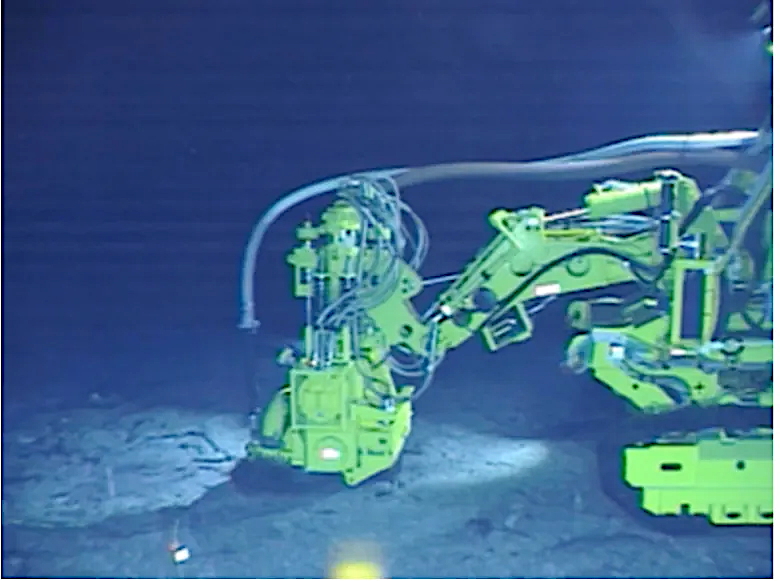
Japan is now accelerating efforts to reduce its dependence on Chinese supply chains. A state-backed expedition this month successfully retrieved mineral-rich mud from a depth of 6,000 meters in the Pacific Ocean near Minamitorishima, an atoll located 1,900 kilometres southeast of Tokyo.
The seabed deposits reportedly contain high concentrations of rare earth elements, including heavy elements such as dysprosium, yttrium and terbium — materials that are particularly critical for high-performance magnets and advanced electronics.
Japan is the world’s second-largest consumer of rare earths after China. Government officials and researchers argue that the deep-sea sites could be commercially competitive with traditional land-based mining operations. They also point to a potential advantage: the relative absence of radioactive byproducts, which are commonly found in conventional rare earth deposits.
However, analysts caution that large-scale deep-sea mining remains technically complex and costly. Thomas Kruemmer of Rare Earth Observer said the Japanese project is less about cost competition at this stage.
“This is the last option,” he said. “They have to act very quickly. It is no longer about price or cost. It is simply about: do you have it or not?”
Test Production Planned for 2027
In the short term, deep-sea mining will not immediately offset potential shortages caused by Chinese restrictions. Japanese automakers are estimated to have sufficient rare earth reserves to last until the end of the year at most.
A pilot phase is scheduled for early 2027. Shoichi Ishii, the Cabinet Office official overseeing the Minamitorishima program for seven years, announced a test run targeting daily extraction of 350 tonnes of seabed mud. The trial will evaluate economic feasibility, dewatering, transport to the mainland and downstream processing.
He expressed confidence in the timeline: “After March 2028, it could become a source of procurement and contribute to the supply chain.”
Source: German Mining News & International press reporting