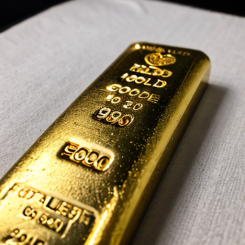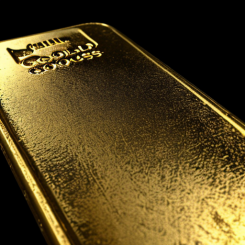





China’s central bank increased its reported gold reserves by 650,000 troy ounces, equivalent to just over 20 tonnes, in August. It was the bank’s largest monthly purchase since October 2023 and its 22nd consecutive month of rising gold holdings.
The figures were published by the People’s Bank of China (PBOC). The August purchase was slightly larger than in July, when the officially reported reserve increased by 640,000 troy ounces.
China’s total gold holdings reached 76.73 million troy ounces at the end of August, compared with 76.08 million a month earlier. Converted into metric units, the reserve amounts to approximately 2,386 tonnes.
The reported value of the holdings increased from USD 306.35 billion in July to USD 350.08 billion in August. Most of the rise in value resulted from the higher gold price rather than from the additional quantity purchased by the central bank.
Gold now accounts for close to 10 per cent of China’s foreign exchange reserves, which total approximately USD 3.4 trillion. This share remains significantly lower than at several major Western central banks, where gold represents a large proportion of total reserve assets.
Gold takes on greater strategic importance
China’s continued purchases are seen as part of a long-term strategy to diversify the country’s foreign exchange reserves and reduce its dependence on US dollar-denominated assets.
The freezing of around USD 300 billion in Russian central bank assets following Russia’s full-scale invasion of Ukraine in 2022 highlighted the geopolitical risks associated with reserves held abroad.
Government bonds and bank assets kept in other countries can be subjected to sanctions or frozen. Physical gold stored domestically is more difficult for a foreign government to block.
Gu Fengda, chief analyst at Guoxin Futures, therefore describes China’s accumulation as a strategic and forward-looking deployment of the country’s reserves rather than a short-term bet on the gold price.
China’s purchases may also contribute to broader diversification away from US government bonds. This does not necessarily mean that the dollar will rapidly lose its dominant position, but it shows that central banks are seeking assets that are not simultaneously another party’s liability.
Gold pays no interest and can fluctuate considerably in value. It nevertheless has a long history as a reserve asset and can protect against periods of inflation, financial uncertainty and geopolitical conflict.
Central banks buy record volumes
China is not alone in strengthening its gold reserves. Central banks acquired a record 288.9 tonnes of gold during the second quarter of 2026, according to the World Gold Council.
This was 62 per cent more than in the same quarter of 2025. Poland was the largest reported buyer, adding 51 tonnes to its reserves. The Polish central bank has set its own long-term target of holding 700 tonnes.
Uzbekistan, Kazakhstan, Jordan and the Czech Republic also reported increases. Turkey, which had been a significant seller earlier in the year, largely stepped back from further sales.
Central bank purchases can support the gold market even when demand from private investors and the jewellery industry varies. Reserve managers generally work with much longer time horizons than market participants responding to short-term changes in interest rates and currencies.
The trend also shows that geopolitical considerations are playing a greater role in gold demand. The metal can have particular strategic value for countries seeking to reduce their exposure to Western financial systems.
Figures for central bank gold holdings are partly based on official disclosures. Not all purchases are necessarily reported immediately, meaning actual flows may differ from the statistics published each month.
Gold price stalls after strong August
Gold rose by almost 10 per cent in August, its strongest monthly performance since January. The increase was linked partly to concerns about US government debt, rising long-term bond yields and a weaker dollar.
The rally subsequently lost momentum. On 7–8 September, gold traded at around USD 4,395–4,428 per troy ounce and struggled to remain above the USD 4,400 level.
Stronger-than-expected US employment data had increased market expectations of a possible interest-rate rise by the Federal Reserve. According to the CME FedWatch tool, the estimated probability approached 60 per cent ahead of the 15–16 September meeting.
Higher interest rates can weaken demand for gold because the metal provides no regular yield. When returns on government bonds rise, the opportunity cost of holding gold also increases.
The market is therefore being influenced by two different time horizons. Short-term investors are monitoring interest-rate decisions, the dollar and US economic data, while central banks such as the PBOC are building reserves according to strategies extending over many years.
China’s August purchase demonstrates that long-term institutional demand is continuing despite the high gold price. If central banks maintain the same strategy, their purchases could remain an important driver of the market.
Sources: People’s Bank of China, World Gold Council, Bloomberg and Oilprice.com.