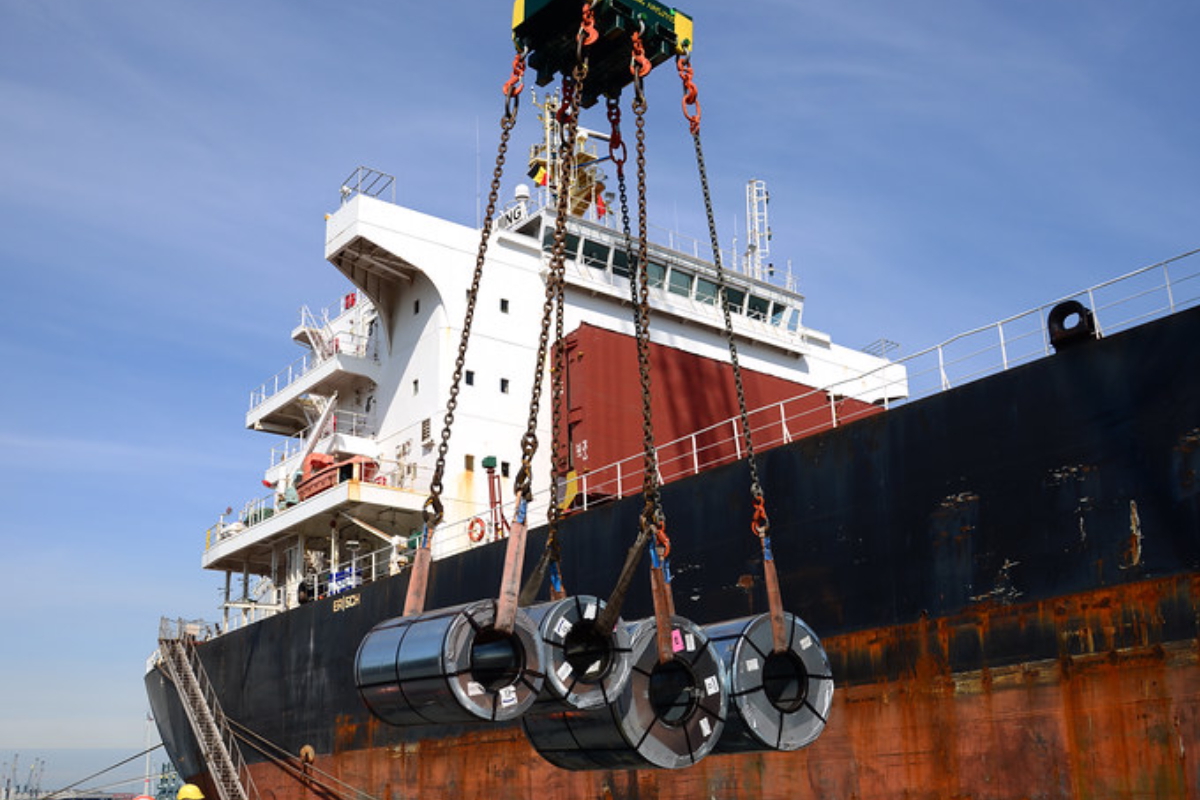



European Union steel exports to the United States have fallen sharply since Washington imposed a 50% tariff on steel imports in the summer of 2025. According to new figures from the European Steel Association (Eurofer), export volumes declined by 34% during the first nine months after the tariffs took effect.
Between July 2025 and March 2026, EU countries exported a total of 1.94 million tonnes of steel to the US. During the same period a year earlier, exports amounted to 2.93 million tonnes. The decline represents nearly one million tonnes of steel.
The figures highlight how US trade barriers continue to weigh on Europe’s steel industry, despite the broader trade agreement reached between the EU and the United States in 2025 covering several other sectors.
Steel Sector Still Under Pressure
The steel and aluminium sectors remain the only major industries still subject to the full 50% US tariffs. Washington has also expanded the measures to cover a wider range of downstream products containing significant amounts of steel.
The tariffs have increased cost pressures on European steelmakers, which are already struggling with high energy prices, weak demand, and growing competition from imports into the European market.
Eurofer Calls for a Solution
Eurofer Director General Axel Eggert has sharply criticised the situation, arguing that the United States has yet to deliver a long-term solution for steel trade.
"One year on, the impact is clear. These tariffs are choking European steel exports to the US, and the issue of market access remains unresolved," he said.
According to Eurofer, the US must now fulfil its commitment to work with the EU on a solution for steel, aluminium, and steel-intensive products. The organisation supports measures such as tariff-rate quotas that would allow a certain volume of exports to enter the US market without punitive duties.
New EU Measures Coming in July
At the same time, the EU is preparing to shield its domestic market from rising import flows.
New safeguard measures are expected to take effect on July 1. The concern is that steel previously destined for the US market could be redirected to Europe, placing further downward pressure on prices in an already weak market.
The current safeguard measures expire on June 30 because World Trade Organisation rules limit such measures to a maximum duration of eight years.
The new framework will continue to rely on tariff-rate quotas but with significantly lower import allowances. Imports exceeding those quotas will face a 50% duty, compared with the current 25% tariff.
Stricter Origin Requirements
The EU is also introducing tougher traceability requirements for steel imports.
A new "melt and pour" rule will make it possible to determine where steel was actually produced. The objective is to prevent steel from countries with large overcapacity from being rerouted through third countries to circumvent trade restrictions.
The measure forms part of the EU’s broader strategy to address global steel overproduction, which has long been a source of trade disputes.
Widening Price Gap Between Europe and the US
The trade conflict has also contributed to a growing price gap between European and American steel markets.
On June 1, hot-rolled coil in Northwest Europe was assessed at EUR 680 per tonne ex-works Ruhr. In the United States, the equivalent price stood at around USD 1,100 per short ton ex-works Indiana.
The widening gap illustrates how the US tariffs have effectively created two increasingly separate markets, forcing European producers to seek alternative export destinations as access to the US market becomes more restricted.
For Europe’s steel industry, upcoming negotiations between Brussels and Washington will therefore be critical for maintaining competitiveness in the years ahead.
Source: Eurofer, S&P Global Commodity Insights
Fact Check:
US steel tariffs are based on the so-called Section 232 provisions, introduced on national security grounds. The first tariffs were imposed during President Donald Trump’s first term in 2018. Despite multiple rounds of trade negotiations between the EU and the US, significant tariffs on steel and aluminium remain in place. At the same time, the global steel market continues to struggle with substantial overcapacity, particularly due to large-scale production in China, which continues to put pressure on prices and profitability for European steel producers.