

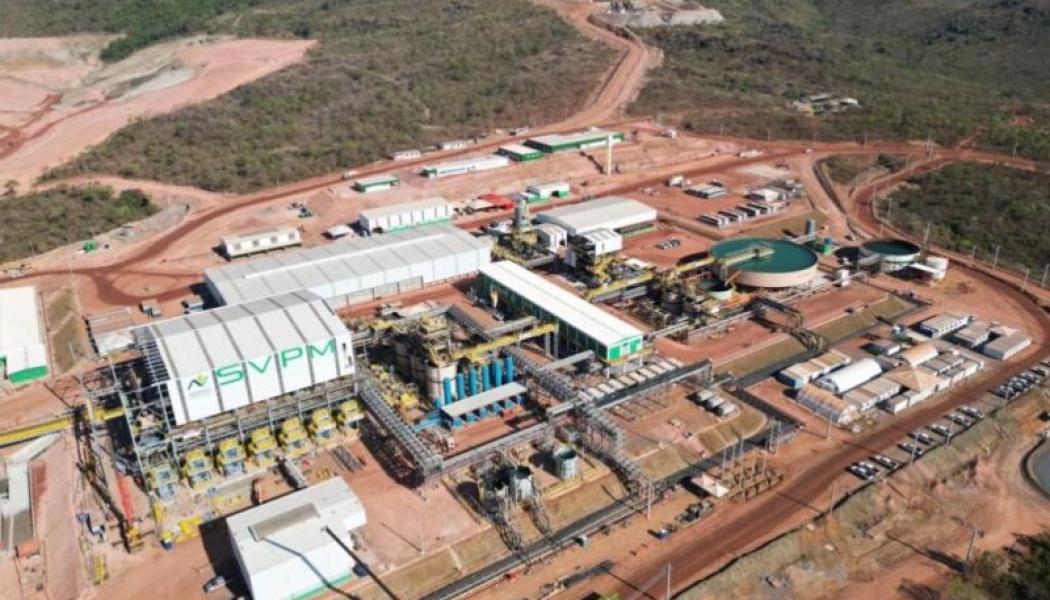
As competition over critical minerals becomes increasingly intertwined with geopolitics, an Australian mining company is taking an unusually direct stance against China’s dominance of the rare earth sector.
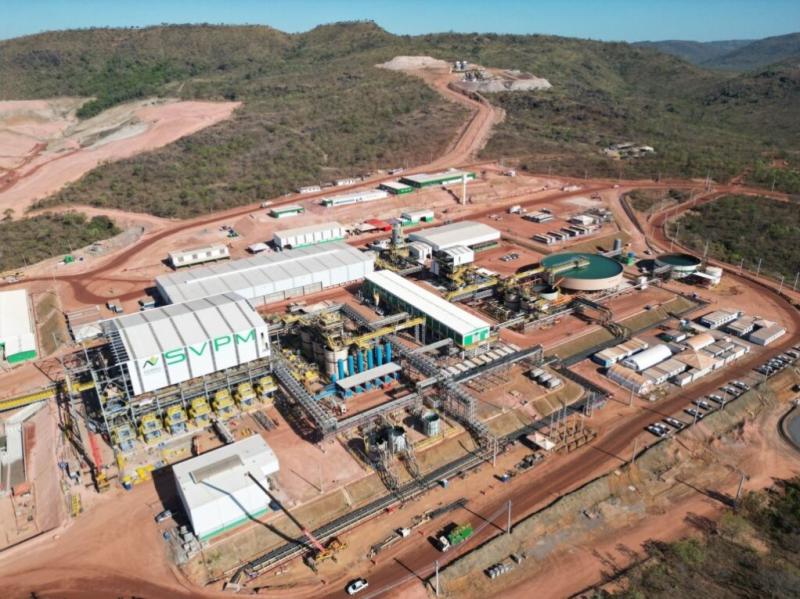
Viridis Mining & Minerals has announced that it intends to exclude Chinese buyers from its flagship Colossus project in Brazil’s Minas Gerais state. Instead, future production of rare earth elements will be targeted at customers in Europe and North America.
The decision comes at a time when access to critical minerals has become one of the defining industrial and strategic challenges facing Western economies.
The metals powering modern industry
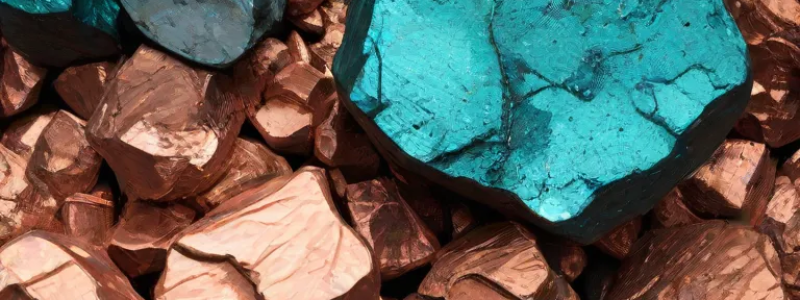
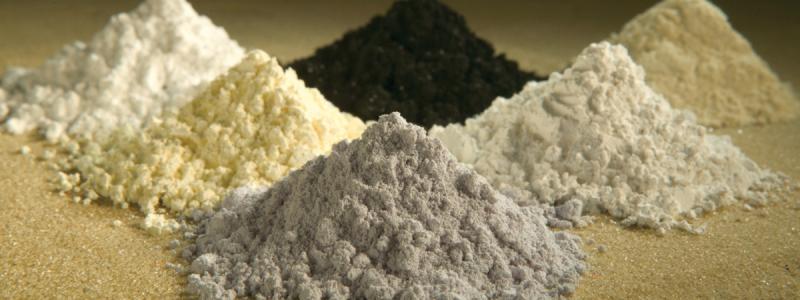
The Colossus project contains several of the rare earth elements that are essential for advanced manufacturing and defence technologies.
Among them are neodymium, praseodymium, terbium and dysprosium, materials widely used in electric vehicle motors, robotics, wind turbines, radar systems, missile technologies and advanced electronics.
Demand for these metals has surged as governments accelerate electrification strategies while simultaneously increasing defence spending amid growing geopolitical tensions.
Yet despite numerous Western initiatives, China remains the dominant force in the sector.
The country accounts for roughly 60% of global rare earth mining output and controls more than 90% of global refining and processing capacity. As a result, rare earth materials extracted in many parts of the world are often shipped to China for processing before entering global supply chains.
Building a supply chain outside China
Viridis Chief Executive Rafael Moreno has stated that the company deliberately chose to develop Colossus outside the Chinese value chain.
According to the company, a Western-focused supply strategy could generate higher long-term value while reducing exposure to Chinese pricing mechanisms and market influence.
The company says discussions are underway with potential customers and financial partners in both Europe and North America. Financing arrangements for the project are expected to be finalised later this year.
Development costs are currently estimated at between USD 360 million and USD 400 million.
New processing centre inaugurated
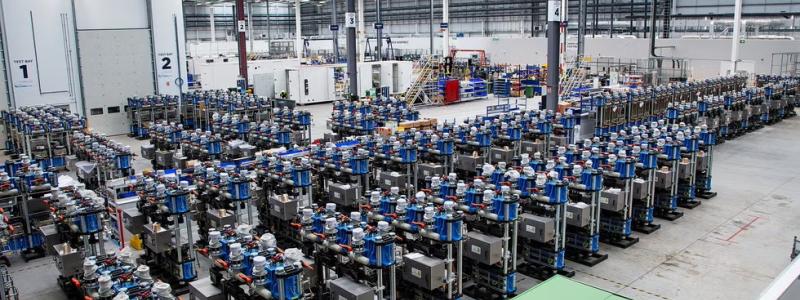
Viridis has also inaugurated a new research and processing facility in Poços de Caldas, Minas Gerais.
The centre is expected to produce the company’s first rare earth concentrate and serve as a critical step toward commercial production. Full-scale operations are currently targeted for 2028.
In addition to mining activities, the company is investing in refining and recycling capabilities within Brazil itself, aiming to reduce dependence on Chinese processing infrastructure.
Part of a broader Western strategy
The project aligns closely with ongoing efforts by both the European Union and the United States to diversify supplies of strategic raw materials.
The EU has established ambitious targets for increasing domestic access to critical minerals before 2030 while reducing reliance on single-source suppliers. Similar initiatives are underway in the United States, where critical minerals have become a central element of industrial policy, national security planning and supply chain resilience programmes.
The growing strategic importance of rare earths has also attracted attention from other major powers. Recent reactions from Russia and China underscore how control over critical minerals is increasingly viewed as a geopolitical asset rather than simply an economic resource.
Brazil’s growing role in the critical minerals sector
Brazil possesses the world’s second-largest known reserves of rare earth elements after China. Despite that advantage, the country has historically played only a limited role in global production.
That situation is beginning to change.
Government initiatives and private investments are supporting a growing number of mining and processing projects aimed at establishing Brazil as a significant supplier of critical minerals.
If successful, Colossus could become one of the most important non-Chinese sources of rare earth materials available to Western markets.
Strategic opportunity—but significant challenges remain
Despite the project’s ambitions, major hurdles remain.
Mining projects outside China have often struggled to compete with Chinese producers, which benefit from scale, integrated supply chains and lower processing costs.
Moreover, China’s dominance extends beyond mining. Refining, separation technologies and permanent magnet production remain heavily concentrated within the country.
That means opening new mines in Brazil, Australia or Canada does not automatically eliminate Western dependence on Chinese supply chains.
For Viridis, the challenge will be demonstrating that an alternative rare earth ecosystem can operate competitively without relying on Chinese demand or processing infrastructure.
The Colossus project is therefore about far more than a new mine. It has become a test case for Western efforts to build independent supply chains for some of the most strategically important materials of the twenty-first century.
Source: Reuters, Viridis Mining & Minerals, EIT RawMaterials.
Fact Check:
China remains the dominant global player in rare earth processing and magnet manufacturing, with estimates suggesting it controls more than 90% of refining capacity. Brazil, meanwhile, holds the world’s second-largest known rare earth reserves but has so far contributed relatively little to global commercial production. As a result, projects such as Colossus are being closely watched by policymakers and industry leaders seeking alternatives to Chinese supply chains. However, history shows that establishing competitive rare earth production outside China remains both technically challenging and financially demanding.









![Schematic of a polymetallic nodule mining operation. From top to bottom, the three zoom-in panels illustrate the surface operation vessel, the midwater sediment plume, and the nodule collector operating on the seabed. The midwater plume comprises two stages: (i) the dynamic plume, in which the sediment-laden discharge water rapidly descends and dilutes to a neutral buoyancy depth, and (ii) the subsequent ambient plume that is advected by the ocean current and subject to background turbulence and settling.[1] Image: Wikipedia Commons, Kredit: Carlos Muñoz-Royo.](https://www.miningmetalnews.com/sites/default/files/styles/article_frontpage_small/public/media-cover-images/schematic-of-a-polymetallic-nodule-mining-operation-from-top-to-bottom-the-three_2_0.jpg?h=3df05eba&itok=fdvTZ2tH&u=1776673036)
![Schematic of a polymetallic nodule mining operation. From top to bottom, the three zoom-in panels illustrate the surface operation vessel, the midwater sediment plume, and the nodule collector operating on the seabed. The midwater plume comprises two stages: (i) the dynamic plume, in which the sediment-laden discharge water rapidly descends and dilutes to a neutral buoyancy depth, and (ii) the subsequent ambient plume that is advected by the ocean current and subject to background turbulence and settling.[1] Image: Wikipedia Commons, Kredit: Carlos Muñoz-Royo.](https://www.miningmetalnews.com/sites/default/files/styles/related_news_image/public/media-cover-images/schematic-of-a-polymetallic-nodule-mining-operation-from-top-to-bottom-the-three_2_0.jpg?h=3df05eba&itok=My_MmN9i&u=1776673036)