
Demand for uranium is growing rapidly among Asian buyers, while development in the West remains considerably slower. At the same time, new customer groups, including major data centre companies, are showing interest in securing future access to nuclear fuel.
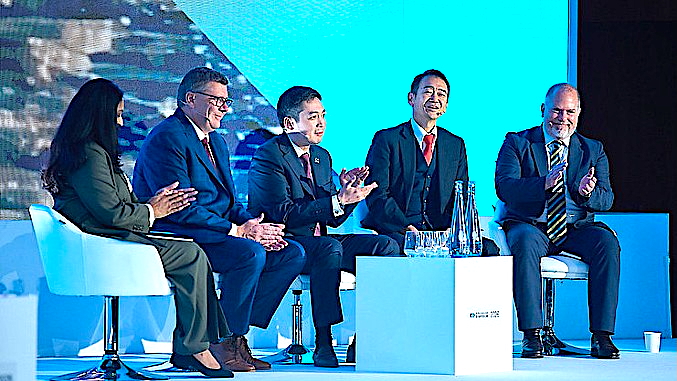
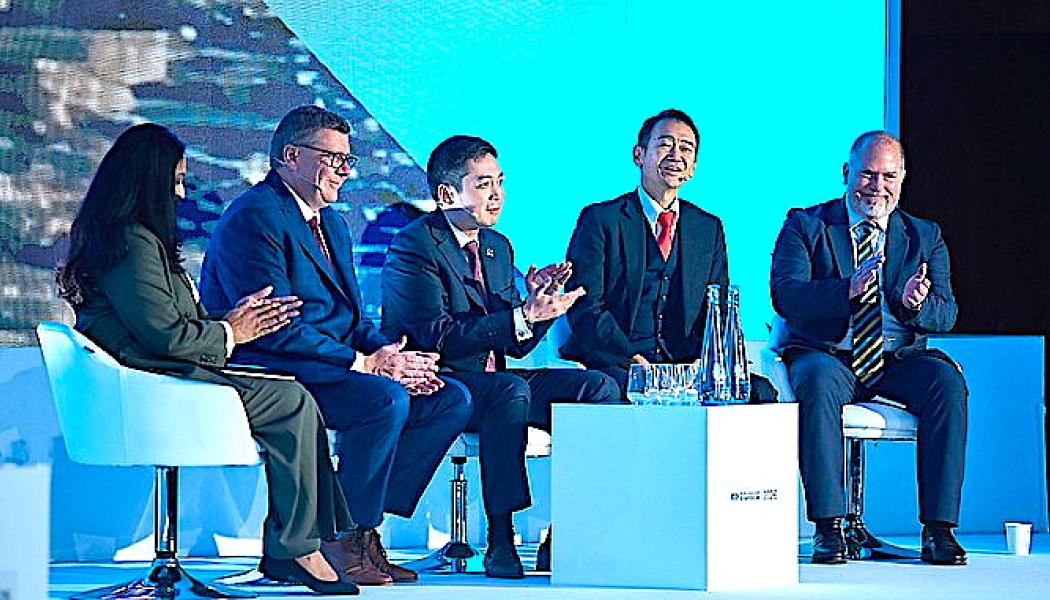
The development was highlighted when senior representatives of Kazatomprom and Cameco, the world’s two largest uranium producers, discussed market conditions at the World Nuclear Symposium 2026 in London.
According to Kazatomprom’s Chief Strategy and International Development Officer, Dastan Kosherbayev, the company could sell its entire uranium production to Eastern customers and still not satisfy total demand in those markets.
Kazatomprom currently has a geographically diversified sales portfolio. About half of its annual sales go to markets classified by the company as Eastern, while the remainder is divided almost equally between Europe and the United States.
Demand in the East continues to grow from year to year and is supported by concrete decisions on new reactors, fuel procurement and expanded nuclear capacity, Kosherbayev said. No comparable momentum is yet visible in the West.
– We are eagerly waiting for one of the countries in the West to actually start delivering on its plans for new nuclear capacity, Kosherbayev said at the conference.
Kazatomprom is Kazakhstan’s state-controlled uranium producer and accounts for a significant share of global mine production. Its sales decisions can therefore influence international availability and utilities’ ability to conclude long-term supply agreements.
Uranium seen as a strategic commodity
According to Kosherbayev, many Asian customers regard uranium as a strategic resource rather than a commodity that should primarily be purchased at the lowest possible price. For these buyers, securing sufficient volumes and reliable long-term deliveries is often more important than price.
– We find ourselves in a situation where we could sell our entire production to the East and there would still be additional demand from that region, Kosherbayev told journalists at the symposium.
He emphasised that Kazatomprom is prepared to trade with all serious customers, provided that agreements are commercially beneficial to everyone involved. As a commercial company, it must also maximise value for its shareholders.
Kosherbayev believes buyers need to recognise that the uranium market has entered a new chapter rather than merely another temporary price cycle.
The shift reflects a growing focus on energy security, new reactor projects and utilities’ need to replace older supply contracts. Geopolitical risks and efforts to reduce dependence on Russian parts of the nuclear fuel cycle are also influencing the market.
Uranium mining represents only one stage of the nuclear fuel supply chain. Once extracted, the material must be converted and enriched before it can be manufactured into reactor fuel. Shortages or bottlenecks at any of these stages can affect utilities’ procurement strategies.
Cameco waits for stronger market conditions
Canadian producer Cameco operates major uranium assets in Canada and is also Kazatomprom’s joint venture partner in the Inkai mining operation in Kazakhstan.
Cory Kos, Cameco’s Vice-President of Investor Relations and Communications, said customers were prepared to pay a premium for reliable production from politically stable jurisdictions.
Prices and contract terms are not yet attractive enough, however, for Cameco to restart its Tier 2 assets. These include lower-priority and mothballed mines, including operations in the United States.
Cameco considers these assets competitive with entirely new mining developments. Restarting a mine with a history of production may involve less risk than developing a new deposit from the ground up.
Kos said customers could face a choice between financing a new producer that may not begin delivering until 2035 or 2036 and signing an agreement with an established company capable of restarting existing operations.
A new mine requires extensive permitting, financing, construction and technical development. It can therefore face delays and cost increases before its first uranium reaches the market.
Cameco nevertheless does not intend to release additional volumes without long-term contracts that justify the necessary investment. The company has repeatedly emphasised that production decisions should be supported by sustainable demand rather than short-term price movements.
Data centre companies show interest
A new development is that major technology and data centre companies have begun exploring the possibility of purchasing uranium. These companies, often referred to as hyperscalers, require very large volumes of continuous and reliable electricity for cloud services and AI systems.
According to Kos, Cameco has sent preliminary term sheets to several well-known technology companies. None has yet purchased uranium, and the discussions remain at an early stage.
The interest is primarily driven by energy security rather than the prospect of short-term gains from commodity trading. The companies are examining several strategies for their future electricity supply.
Some may invest in and operate their own reactors, while others could sign long-term power purchase agreements with nuclear power plants. Other companies may continue buying electricity from the grid but still seek to secure part of the fuel needed for the generation on which they depend.
Holding uranium or concluding a long-term supply agreement could reduce exposure to a future shortage. A data centre operator could, for example, arrange for uranium to be supplied to the utility operating the reactor that provides its electricity.
Kos stressed that the discussions have not yet resulted in any purchases. The interest nevertheless shows that new participants are beginning to view nuclear fuel as part of their long-term energy strategies.
The future direction of the uranium market will depend both on how quickly new reactors are built and on when utilities and other large electricity users convert their plans into binding fuel contracts. Producers currently see stronger action in the East, while much of the West remains in the planning phase.
Source: World Nuclear News and statements from Kazatomprom and Cameco at World Nuclear Symposium 2026.