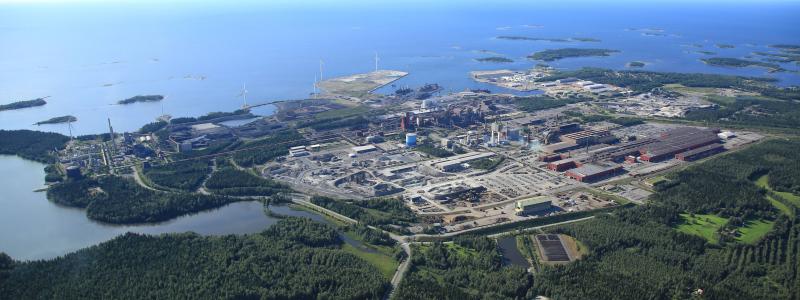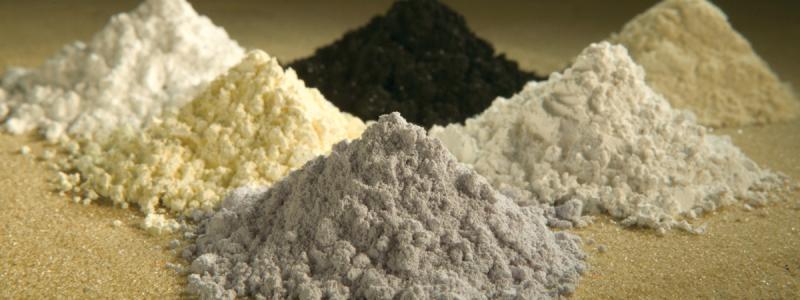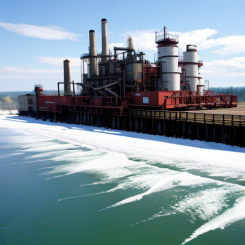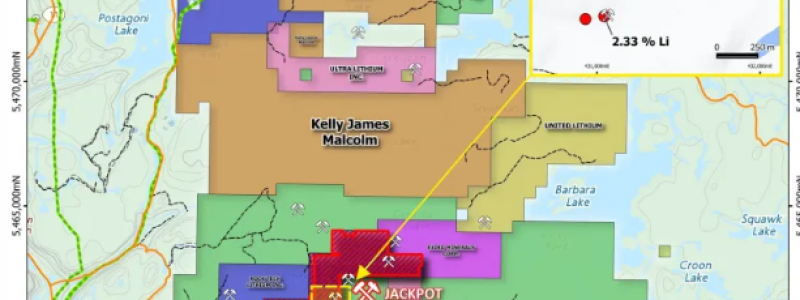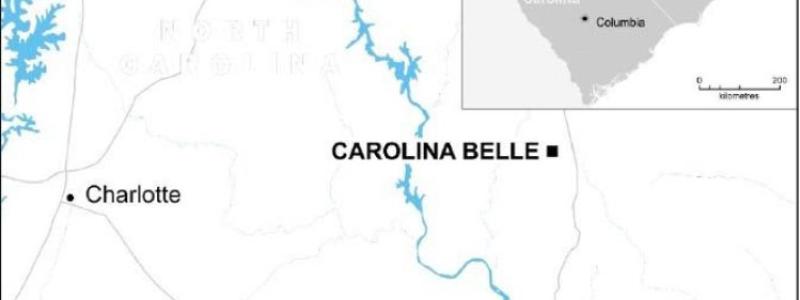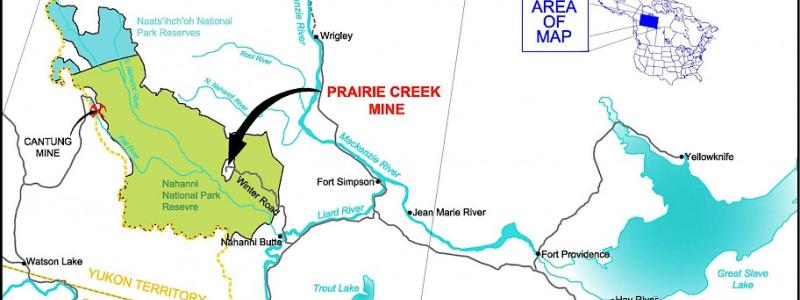

The Sarfartoq project is located around 60 kilometres southwest of Kangerlussuaq in western Greenland. The ST1 deposit evaluated so far primarily contains neodymium and praseodymium, which are used in permanent magnets for electric vehicles and wind turbines. Map: Greenland Mines.
A proposed mining project in western Greenland could become an important source of rare earth elements for Western industries. According to a new independent initial assessment, the Sarfartoq project could produce the equivalent of around one-third of all neodymium-praseodymium oxide currently refined outside China.
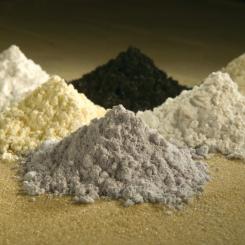
Sarfartoq is located approximately 60 kilometres southwest of Kangerlussuaq and is particularly rich in neodymium and praseodymium. The two elements are used to manufacture high-performance permanent magnets for electric vehicles, wind turbines, robotics, electronics and defence equipment.
The project is being developed by Nasdaq-listed Greenland Mines. The current study covers only the ST1 deposit, one of around 40 identified target areas within the wider project.
Under the preliminary mine plan, Sarfartoq could mine and process approximately 1.4 million tonnes of ore annually over an estimated operating life of nine years. A total of 12.2 million tonnes of material is expected to be processed.
Greenland Mines estimates that the planned annual production of neodymium-praseodymium oxide, commonly referred to as NdPr oxide, would equal around 34 per cent of all NdPr oxide refined outside China, based on 2025 consumption levels.
However, this estimate assumes that the project is developed according to the preliminary plan. Sarfartoq has not yet reached the prefeasibility or feasibility stage, and construction of a mine has neither been approved nor financed.
Neodymium and praseodymium dominate project value
According to the study, the ST1 deposit contains an indicated mineral resource of 6.9 million tonnes grading an average of 1.60 per cent total rare earth oxides, or TREO.
It also contains an inferred mineral resource of 5.3 million tonnes grading 0.96 per cent TREO. Inferred resources carry a lower level of geological confidence than indicated resources and cannot be considered economically recoverable without further investigation.
The proposed mine plan combines open-pit and underground mining. Material delivered to the processing plant is expected to have an average grade of 1.32 per cent TREO.
Neodymium and praseodymium are estimated to account for approximately 84 per cent of the value of the planned concentrate. The project’s commercial prospects are therefore closely tied to demand for magnet rare earths and future commodity prices.
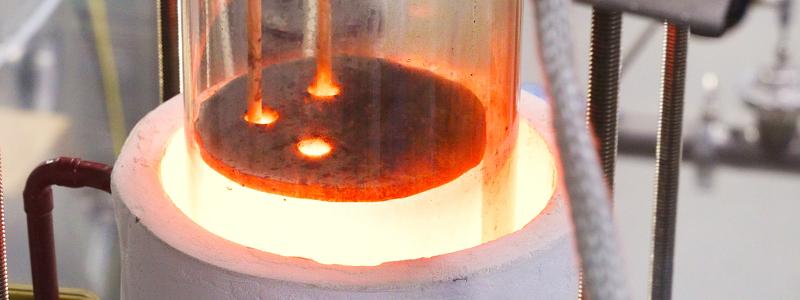
Metallurgical testing conducted at SGS Canada’s Lakefield facility in 2026 produced a flotation concentrate grading around 8.25 per cent TREO. The estimated recovery rate was 63.6 per cent.
Greenland Mines said the rare earth mineralisation occurs in conventional minerals that are already processed commercially at other facilities. This could reduce some of the technical risk compared with deposits requiring entirely new concentration or separation technologies.
Extensive pilot-scale testing will nevertheless be required before the process can be assessed under industrial conditions. Laboratory results do not guarantee that comparable recovery rates can be maintained continuously at a full-scale processing facility.
Only a small part of the licence area has been explored
The exploration licence covers approximately 191 square kilometres, while ST1 occupies considerably less than 1 per cent of the area, according to the company. The initial assessment therefore covers only a limited part of the project’s potential resource base.
Five additional rare earth occurrences – ST40, ST19, ST24, ST31 and ST43 – have been identified along an outer ring structure extending for approximately 32 kilometres. These areas remain largely untested.
Greenland Mines plans targeted infill drilling to upgrade parts of the inferred resource to a more reliable classification. The company also intends to undertake pilot-scale metallurgical testing, further mine engineering and additional technical studies.
Environmental and social baseline studies are continuing in parallel. Their results will support work towards a prefeasibility study, which would be required before a full feasibility study and possible project financing could be considered.
Agricola Mining Consultants prepared the initial assessment in accordance with the US Securities and Exchange Commission’s S-K 1300 reporting rules. The study has an effective date of 31 July 2026, and an independent qualified expert reviewed its technical information.
Western economies seek alternatives to China
Sarfartoq is attracting attention as the European Union, the United States and several Asian industrial economies seek to reduce their dependence on Chinese suppliers of critical minerals.
China accounted for approximately 61 per cent of global mined production and around 91 per cent of worldwide refining and processing capacity for key rare earth elements in 2024, according to the International Energy Agency.
The dependency is particularly pronounced in materials used to make permanent magnets. Even when rare earths are mined in other countries, much of the material is still sent to China for separation, refining and further processing.
A Greenland mining project could therefore become strategically important for European and North American supply chains. However, Sarfartoq’s potential 34 per cent share refers only to production outside China and is calculated using 2025 levels. Its eventual share could be lower if new refineries are built or global demand increases.
The market is also exposed to significant price movements. S&P Global Commodity Insights assessed neodymium-praseodymium oxide at 115 dollars per kilogram for delivery to North America on 31 July 2026. This was 5 dollars per kilogram lower than a month earlier.
The assessed price of terbium oxide, by contrast, increased from 4,800 dollars per kilogram in June to 4,900 dollars per kilogram in July.
Sarfartoq could consequently become a significant addition to Western supplies of magnet rare earths. The new study, however, primarily demonstrates the project’s technical and geological potential. Further drilling, environmental assessment, engineering, permitting and financing will be required before commercial production can begin.
Sources: S&P Global Commodity Insights, Greenland Mines, the independent initial assessment prepared by Agricola Mining Consultants and the International Energy Agency.