

The prolonged drought in Central Europe is beginning to disrupt some of the steel industry’s most important transport routes. Extremely low water levels on the Rhine and Danube are forcing barges to reduce their loads or withdraw from service, while steelmakers divert raw materials and finished products to rail and road.
Tata Steel Nederland has suspended routine use of the Danube and is sending deliveries to Central and Eastern Europe by rail instead. ArcelorMittal has made isolated production adjustments at its Duisburg steelworks, while Thyssenkrupp Steel has already reduced hot-metal output because of constraints on raw-material supplies.
The effects remain manageable for several major producers. However, the industry is preparing for more serious disruption if the drought continues and river levels remain low through the late summer.
The development is also relevant to Nordic steel producers, engineering companies and buyers. The Rhine is a crucial transport link between the North Sea ports of Rotterdam and Antwerp and some of Europe’s largest industrial regions. Reduced capacity on the river can therefore spread higher costs and delivery delays throughout the European steel market.
Steelmakers shift freight to rail
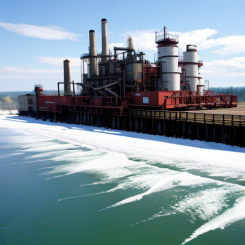
Tata Steel Nederland produced 6.7 million tonnes of steel in 2025 at its coastal plant in IJmuiden. Despite its proximity to the North Sea, the company relies on Europe’s inland waterways for a substantial share of its deliveries to customers farther inland.
Over several years, the steelmaker has developed alternative rail connections to make its logistics network less vulnerable to both high and low river levels. It has now suspended regular shipments on the Danube following the latest sharp decline in water levels.
– We have established rail-based transport routes for deliveries to Central and Eastern Europe. As a result, we have phased out regular transport via the Danube until normal water levels return and river shipping once again becomes a viable option, a Tata Steel Nederland spokesperson told Platts.
The measures have so far limited the disruption. The steelworks has not experienced a water shortage or had to reduce production. That could change, however, if the drought persists.
Fresh water is used for cooling in several parts of the steelmaking process. The problem is therefore not limited to freight transport. A prolonged drought could also affect the availability of process and cooling water at industrial facilities.
ArcelorMittal has similarly opened alternative transport routes and adjusted its supply chains. The group currently believes that deliveries of raw materials to its German plants, as well as shipments to customers, can continue.
Low water levels have nevertheless resulted in isolated production adjustments at its Duisburg facility. The plant specialises in billets, bars and wire rod and depends on the movement of large material volumes through the interconnected rivers and canals of Germany’s Ruhr region.
Barges can carry only part of their normal load
Low water does not necessarily bring river traffic to an immediate halt. Barges can initially continue operating, but must reduce their cargo to maintain a sufficiently shallow draught.
This quickly raises transport costs. More vessels and journeys are required to carry the same volume of iron ore, coal, scrap or finished steel. When levels fall further, even lightly loaded standard vessels may be unable to cross the shallowest stretches.
The Kaub gauge on the Middle Rhine is particularly important for shipping between the North Sea ports and industrial sites farther south. In early August, Germany’s inland shipping industry warned that this section could become impassable for commercial freight traffic. Some operators have already suspended sailings on parts of the river.
According to Germany’s low-water information system, 44 per cent of measuring stations on the Rhine and 78 per cent of those on the Danube had recorded extremely low levels by the end of July.
A source at a German steel service centre told Platts that freight costs had risen to at least four times their normal level in some cases. The company has been forced to use trucks where river deliveries are no longer possible.
A truck can carry only a fraction of the cargo transported by a large barge. The shift consequently requires more vehicles, drivers and terminal capacity. Road transport also normally produces higher emissions per tonne of cargo.
Rail is better suited to moving large volumes, but spare capacity is limited. Train paths, locomotives, freight wagons and transhipment terminals cannot be expanded at short notice when many industrial companies are simultaneously seeking alternatives to inland shipping.
Several German states have temporarily relaxed restrictions on Sunday truck movements to support freight transport. The measure illustrates how disruption on the Rhine now extends far beyond the steel industry.
Thyssenkrupp cuts hot-metal production
Thyssenkrupp Steel began experiencing disruption at its large Duisburg steelworks in mid-July. The company withdrew its own push-barge fleet from service after water levels became too low.
It is now chartering vessels with shallower draughts and has introduced a range of other logistical measures. Despite these efforts, the supply of raw materials has become constrained enough to require adjustments to hot-metal production.
According to a German distributor quoted by Platts, the Duisburg plant normally holds inventories sufficient for approximately one to two months of production. Much of its imported raw material first arrives at Rotterdam or Antwerp before being transported inland.
Inventories can cushion the effects of short-term disruption, but they cannot resolve a prolonged shortage of shipping capacity. Demand for trains and trucks could also remain elevated after river levels begin to recover, as companies attempt to replenish depleted stocks.
For the steel market, the drought could mean higher logistics costs, longer delivery times and temporary production reductions at particularly exposed mills. It is still too early to determine whether the disruption will be extensive enough to have a broader effect on European steel prices.
The situation nevertheless highlights the growing industrial risk associated with extreme weather. Steelworks built beside major rivers have traditionally benefited from inexpensive transport for large volumes of heavy raw materials. The same geographical advantage becomes a vulnerability when waterways can no longer accommodate normal cargo loads.
Tata Steel Nederland’s investment in permanent rail alternatives points to a broader shift. European steelmakers increasingly need several parallel transport options, even where this results in higher costs than traditional inland shipping.
Facts: Why the Rhine is vital to industry
- The Rhine connects Rotterdam and other North Sea ports with major industrial regions in Germany, France and Switzerland.
- It carries iron ore, coal, steel, chemicals, fuels and agricultural products.
- Low water forces barges to reduce their loads to pass shallow sections.
- Kaub on the Middle Rhine is a particularly sensitive bottleneck.
- Rail and road alternatives are more expensive and have limited spare capacity.
- The Danube is another major freight route serving Central and Eastern Europe.
Sources: Platts/S&P Global Energy, Tata Steel Nederland, ArcelorMittal, Thyssenkrupp Steel and Reuters.