

Copper has performed more strongly than several other industrial metals following this year’s sharp market swings. Demand is being supported by investment in power grids, renewable energy and energy-intensive AI data centres.
Metals markets have moved from record highs to sharp price declines in only a matter of weeks. Rising energy costs, inflation concerns and uncertainty over interest rates are driving the turbulence. However, the downturn is not affecting every metal in the same way.
Copper is being supported by investment in electricity networks, renewable energy and AI data centres, while palladium and rhodium are coming under pressure from a weaker automotive market.
Base metals are caught in a tug-of-war between two opposing forces. Over the longer term, electrification, the energy transition and the rapid expansion of data centres are expected to increase demand. In the shorter term, weaker economic growth, high energy prices and the risk of persistently restrictive monetary policy are weighing on the market.
The London Metal Exchange’s LMEX index climbed to a record high in early June. Shortly afterwards, it fell to its lowest level in three months as tensions in the Middle East pushed up oil prices and revived concerns about global inflation.
Investors holding leveraged positions began selling commodities and other assets to raise cash.
According to a market analysis published by Oilprice.com and based on assessments from Standard Chartered, metals prices during the remainder of the year are likely to be heavily influenced by US Federal Reserve policy, movements in the dollar, developments in the Chinese economy and changes in trade tariffs.
Standard Chartered also notes that production disruptions and unevenly distributed inventories continue to generate significant price volatility.
Copper supported by power grids and AI
Copper stands out as the clearest winner in an increasingly divided metals market. Prices on the London Metal Exchange have mainly remained between USD 13,000 and USD 14,000 per tonne in recent months, after reaching a record level of around USD 14,000 in May.
Standard Chartered expects copper prices to remain elevated during the second half of the year. Supporting factors include weaker-than-expected mine production, uncertainty surrounding US tariffs, and substantial inventory movements from Europe and Asia to the United States.
Signals from China are also supportive. The country’s imports of unwrought copper and copper products rose to 478,000 tonnes in June, an increase of four per cent compared with the same month in 2025.
At the same time, inventories on the Shanghai Futures Exchange have declined, suggesting that supplies available on the domestic market have tightened.
Long-term demand is being driven primarily by power grids, electrification and new digital infrastructure. The International Energy Agency (IEA) estimates that global copper demand will increase by approximately seven million tonnes by 2040.
Copper is therefore expected to record the largest increase in volume among the critical minerals monitored by the organisation.
The IEA’s latest forecast is slightly less dramatic than its previous assessment but still points to a substantial deficit. Mining projects announced to date are expected to cover only around 75 per cent of demand in 2035.
This would represent a potential supply shortfall of 25 per cent, compared with 30 per cent in the IEA’s previous forecast.
Aluminium retreats after record rally
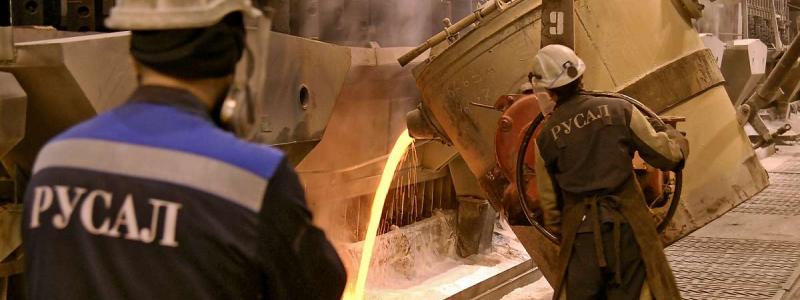
Aluminium has experienced a much more volatile performance. The Middle East accounts for a significant share of global production, and disruptions at smelters in the region pushed prices above USD 3,700 per tonne in early June, their highest level in four years.
Prices have since fallen sharply. By the beginning of July, much of the geopolitical risk premium had disappeared.
According to S&P Global, the London Metal Exchange spot price was then 16.2 per cent below its June average after shipments through the Strait of Hormuz improved and several smelters in the Gulf region restarted more quickly than expected.
Standard Chartered nevertheless believes the sell-off may have gone too far. More than three million tonnes of production capacity has been affected by curtailments and damage, and it is unlikely that all of this capacity will return at the same time.
Supply is also expanding rapidly in Asia. Indonesia continues to increase its aluminium output, while China is approaching its annual production ceiling of 45 million tonnes.
Chinese exports of unwrought aluminium and aluminium products reached a record 711,000 tonnes in June, helping to limit upward pressure on prices.
Standard Chartered has therefore reduced its forecast for the average aluminium price in 2026 from USD 3,478 to USD 3,318 per tonne.
Automotive metals emerge as losers
The outlook is weaker for several platinum group metals. Palladium and rhodium are primarily used in catalytic converters that reduce emissions from petrol and hybrid vehicles.
When automotive production forecasts are revised downwards, expected demand for these metals also declines.
Palladium fell to around USD 1,200 per ounce in June. Standard Chartered has subsequently reduced its forecast for the average 2026 price from USD 1,850 to USD 1,454 per ounce.
The downgrade reflects weaker automotive demand, rising exchange inventories and increasingly negative investor sentiment.
Speculative investors have expanded positions that profit from further price declines, while available inventories have not been fully absorbed by the market.
Rhodium has also come under pressure. Standard Chartered still expects a modest supply deficit in 2026 but believes the market will move closer to balance in 2027.
Its average rhodium price forecast for 2026 has been reduced from USD 9,563 to USD 9,268 per ounce.
Platinum is expected to be somewhat more resilient than palladium and rhodium. However, weaker vehicle sales, rising recycling volumes and reduced interest in exchange-traded metals products are also weighing on its outlook.
The developments show that the metals market is no longer moving as a single block. Copper is supported by structurally growing demand and limitations in mine production.
Aluminium is balancing between damaged production capacity in the Middle East and rapidly increasing supply in Asia. Palladium and rhodium, by contrast, are becoming increasingly dependent on the speed of change in the automotive industry.
The forecasts nevertheless remain uncertain. A renewed escalation around the Strait of Hormuz, changes to US tariffs or unexpected Chinese stimulus measures could quickly alter the balance between the market’s winners and losers.
Facts: Standard Chartered’s price forecasts
Aluminium 2026: USD 3,318 per tonne
Previous forecast: USD 3,478 per tonne
Palladium 2026: USD 1,454 per ounce
Previous forecast: USD 1,850 per ounce
Rhodium 2026: USD 9,268 per ounce
Previous forecast: USD 9,563 per ounce
Sources: Oilprice.com, Standard Chartered, the International Energy Agency and S&P Global Market Intelligence.