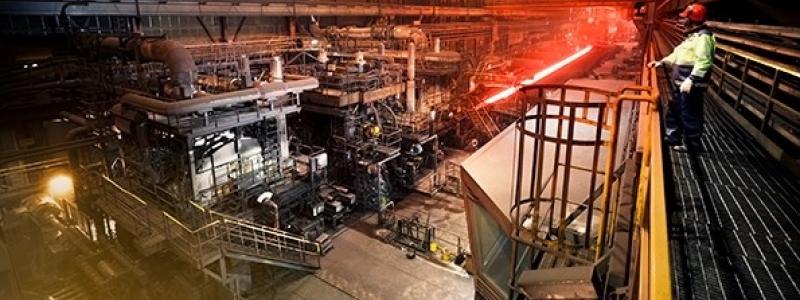

Finland's steel market is showing clear signs of recovery after several years of subdued demand. According to steel distributor Feon, orders are increasing rapidly as new investments in defence, data centres, energy infrastructure and manufacturing drive broad-based growth across the country's metals sector.
The development reflects a wider transformation taking place across Europe, where major investments in energy infrastructure, electrification and security are creating a new investment cycle and significantly increasing demand for advanced steel products.
For Feon, which imports more than 90 per cent of its steel and metal products from international suppliers, the stronger market is clearly visible in incoming orders.
"Demand has strengthened considerably, and the market outlook is far brighter than it was just a year ago," said Petri Kalliokoski, Chief Executive Officer of Feon, in an interview with Tekniikka & Talous.
Data Centres and Defence Reshape the Market
Several powerful megatrends are driving the recovery.
The rapid expansion of hyperscale data centres across the Nordic region continues as investments in artificial intelligence and cloud computing accelerate. These facilities require enormous quantities of structural steel, reinforcement products, pipes, cable systems and other metal infrastructure.
At the same time, Europe's large-scale defence buildup following Russia's invasion of Ukraine continues to boost demand for military equipment, armoured vehicles and ammunition, increasing the need for high-strength and wear-resistant speciality steels.
Investments in electricity grids, wind farms, battery plants, industrial modernisation, and other energy infrastructure projects are also contributing to stronger demand.
Many of these projects are supported, wholly or in part, by European Union funding programs targeting the green transition and transport infrastructure.
Finland Remains Highly Dependent on Imported Steel
The recovery also highlights Finland's continued dependence on international steel markets.
More than 90 per cent of the steel products sold by Feon are sourced from foreign manufacturers, making the company an important link between the global steel industry and Finland's engineering, manufacturing and construction sectors.
As a result, domestic steel prices remain heavily influenced by international market developments.
In recent years, the industry has faced high energy costs, disruptions to global supply chains, geopolitical tensions and new trade measures. At the same time, the European Union continues to implement its Carbon Border Adjustment Mechanism (CBAM), gradually reshaping competition for imported steel.
For European steel producers, these developments create both opportunities and challenges. While climate regulations are becoming increasingly stringent, demand for high-quality steel products needed for industrial transformation continues to grow.
Green Steel Becomes the Next Major Transformation
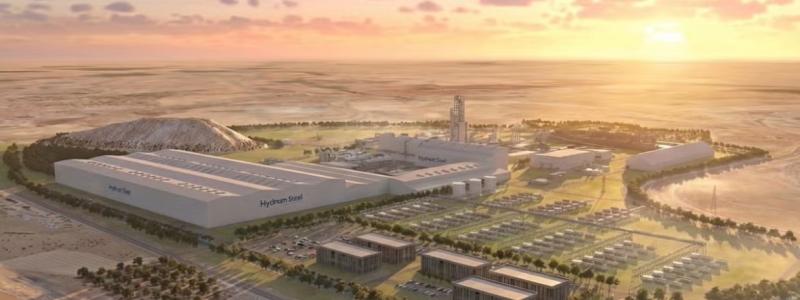
Another significant trend is the transition toward fossil-free steel production.
Nordic steelmakers are investing billions of euros in technologies that replace coal with hydrogen and fossil-free electricity. The objective is to reduce carbon dioxide emissions from an industry that currently accounts for approximately seven per cent of global CO₂ emissions.
The transition, however, remains both expensive and technically demanding. Consequently, conventionally produced steel and low-carbon steel are expected to coexist in the marketplace for many years.
For industrial customers, availability, delivery reliability and competitive pricing will continue to play a decisive role in purchasing decisions.
A New Investment Cycle Is Taking Shape
Many industry observers view the strengthening steel demand as evidence that Finland's industrial sector is entering a new investment cycle.
Over the past two years, high interest rates and a weak construction market have slowed investment activity. That situation is now beginning to change as numerous large-scale projects move from planning into execution.
This is particularly evident in data centre developments, industrial electrification, new energy facilities and defence-related manufacturing.
For steel distributors such as Feon, the stronger market represents a significant business opportunity. The recovery is also expected to benefit logistics providers, ports, engineering companies and a wide range of industrial subcontractors.
If the current pace of investment continues, Finland's steel market could experience its strongest period of growth since before the COVID-19 pandemic.
Fact Box: Why Steel Demand Is Increasing
- Artificial intelligence and new data centres require vast amounts of structural steel.
- Europe's defence industry is expanding production across the continent.
- Grid expansion and industrial electrification are driving major investments.
- Wind power, battery factories and energy projects require increasing volumes of speciality steel.
- Manufacturers continue investing in modernisation and fossil-free production technologies.
- EU climate policies and the Carbon Border Adjustment Mechanism (CBAM) are reshaping competition in the European steel market.