


Uzbekistan plans to increase annual uranium production from an estimated 7,500 tonnes in 2026 to 15,000 tonnes by 2030. State mining company Navoiyuran will develop new deposits, expand production facilities and reduce its reliance on sulphuric acid, World Nuclear News reports.
The plans were presented to President Shavkat Mirziyoyev at a meeting on the country’s mining and metals industries. According to the presidential administration, he instructed those responsible to deliver investment projects on time, strengthen the mineral resource base and increase exports.
Officials told the president that global demand for uranium raw materials had risen by 15–20 percent in recent years. The presentation forecast a further increase of 28 percent by 2030.
Exploration and processing capacity to expand
Navoiyuran plans to expand geological exploration and drilling, develop production infrastructure and commission additional sorption units, which capture uranium from the processing solution. The measures planned for 2026 are expected to create 250 jobs.
The company also aims to increase explored uranium reserves to 200,000 tonnes. Cooperation with domestic industrial companies will be strengthened to secure supplies of sulphur, sulphuric acid and nitric acid.
Alternative chemicals to play a larger role
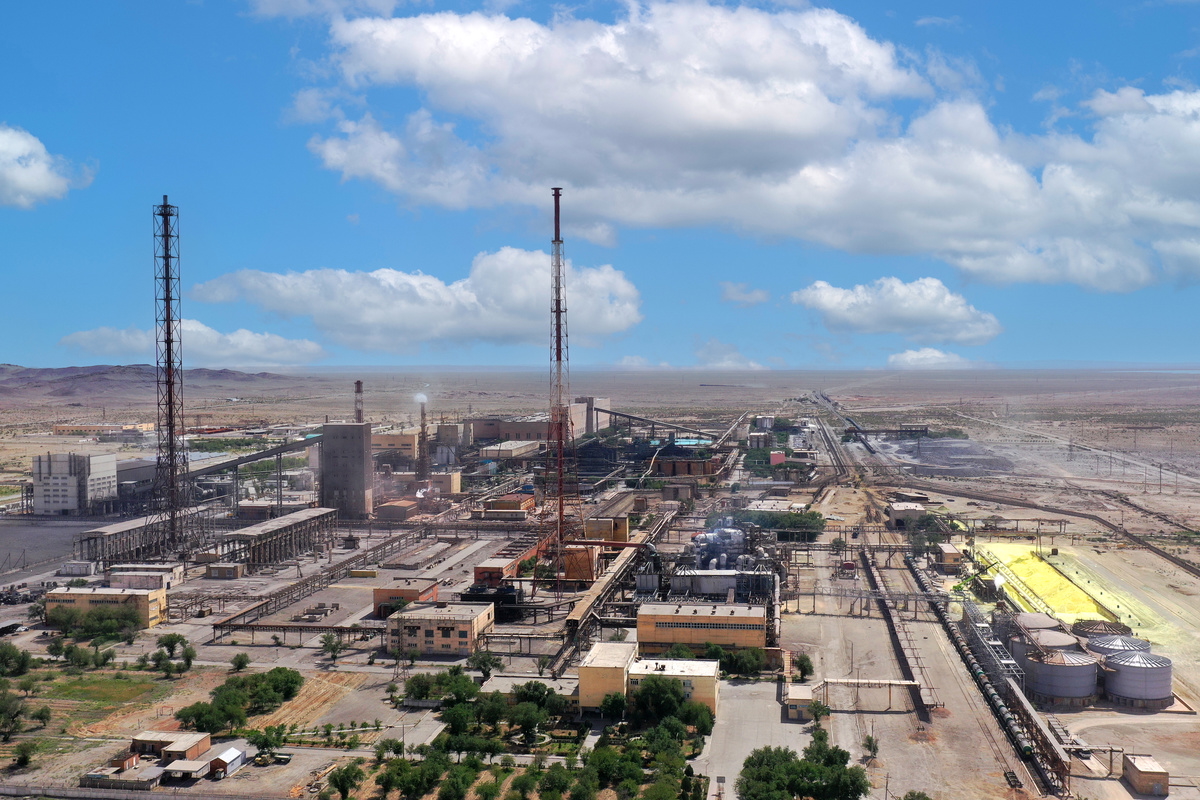
Since the mid-1990s, all uranium production in Uzbekistan has used in situ recovery. The method involves pumping a solution through wells to dissolve uranium underground, then bringing the uranium-bearing liquid to the surface for processing.
Sulphuric acid is an important chemical in this process. Uzbekistan plans to increase the share of alternative processing chemicals to 40 per cent by 2030. Mirziyoyev stressed the need for Navoiyuran to make greater use of alternative production technologies to meet its growth target.
Qizilkok enters commercial production
Commercial uranium production began in April at Qizilkok, the third-largest deposit in Navoiyuran’s portfolio. The planned annual capacity is 1,200 tonnes, with an estimated operating life of 15 years. Production uses oxygen-based in situ leaching technology.
Uzbekistan was the world’s fifth-largest uranium producer in 2024, according to the World Nuclear Association. Output totalled 4,000 tonnes, compared with Australia’s 4,598 tonnes and Russia’s 2,738 tonnes.
In its financial report for the first half of 2026, Navoiyuran said higher sales volumes and a higher average realised uranium price had strengthened its results.
Sources
World Nuclear News, 10 November 2026, citing Uzbekistan’s presidential administration, Navoiyuran and the World Nuclear Association.