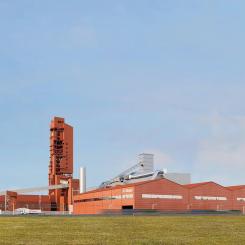




Australian mining company Paladin Energy reported a 19% decline in uranium production at its Langer Heinrich mine in Namibia during the third quarter of 2026. Production costs increased significantly, although higher uranium prices helped offset some of the financial pressure.
According to Paladin's quarterly report, also covered by Oilprice.com, production fell to one million pounds of uranium oxide (U3O8), compared with 1.23 million pounds in the previous quarter. Paladin owns 75% of the mine, while production figures represent the entire operation.
Maintenance and Lower Recovery Reduce Output
Production costs increased from $51.60 to $61.60 per pound, while processing recovery declined from 90% to 85%.
The company attributed the weaker performance to scheduled maintenance, challenging ore characteristics and reduced uranium inventories within the processing plant.
Despite these difficulties, Paladin maintained its fiscal 2027 production forecast of 5.1–5.6 million pounds of uranium oxide, with expected costs of $44–48 per pound.
Production is expected to recover during the second half of the financial year as mining progresses into higher-grade sections of the deposit.
Higher Uranium Prices Limit Financial Pressure
Uranium sales declined from 1.35 million to 1.16 million pounds. However, the average realised selling price increased by approximately 12%, from $70.60 to $79.40 per pound.
Paladin attributed the improvement to stronger uranium markets and a higher proportion of sales linked to market-based pricing.
The company has contracted approximately 20 million pounds of uranium for delivery through December 2030, with 54% linked to market prices.
Unrestricted cash and investments declined from $265 million in June to $209 million at the end of September.
Canadian Uranium Project Targets 2031 Production
Meanwhile, Paladin continues developing its Patterson Lake South uranium project in Saskatchewan, Canada.
The company has signed an agreement with Birch Narrows Dene Nation and established a regulatory timetable with the Canadian Nuclear Safety Commission.
Initial production is targeted for 2031, subject to regulatory approvals and investment decisions. The project is expected to produce approximately nine million pounds of uranium oxide annually over its first ten years.
Recent exploration drilling has also identified promising uranium mineralisation in the Atlas area.
According to Paladin, operational improvements in Namibia and progress in Canada will be important for its ability to respond to growing uranium demand from the nuclear energy sector.
Sources: Paladin Energy, quarterly report for the period ending 30 September 2026, released 14 October; Oilprice.com, Charles Kennedy, 13 October 2026.