



The Finnish municipality of Leppävirta is taking its dispute over the abandoned Särkiniemi mine to court. The municipality wants the state to organise and finance the rehabilitation of the site, which is expected to cost nearly €1.6 million. Authorities rejected the request on the grounds that no funding was available.
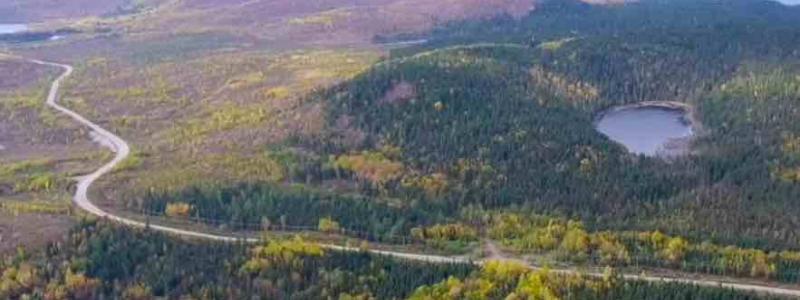
Särkiniemi is situated on a narrow strip of land between Särkilahti and the Arkkuselkä section of Lake Koirusvesi, approximately ten kilometres from the centre of Leppävirta in the North Savo region.
Nickel and copper were mined at the site in 2007 and 2008. Operations were carried out by Finn Nickel and Vulcan Kotalahti, both of which subsequently went bankrupt. Finn Nickel entered bankruptcy in 2009, followed by Vulcan Kotalahti in 2015.
The companies left behind a substantial environmental problem without a financially responsible operator capable of paying for the remediation work.
According to a recent assessment, the former mining area does not pose a health risk to people. It must nevertheless be rehabilitated because of significant damage to the natural environment.
Leppävirta maintains that the state, rather than the municipality’s residents, should bear the cost. It has therefore decided to appeal the authorities’ rejection to the Eastern Finland Administrative Court, Finnish public service broadcaster Yle reported.
Companies disappeared, but liabilities remained
The Särkiniemi case illustrates a recurring problem in the mining industry: who should pay when an operator becomes insolvent, and its financial guarantees are insufficient to restore the site?
Under the polluter-pays principle, the company responsible for environmental damage should finance the necessary measures. If that company has no remaining assets or has ceased to exist, the responsibility may in practice fall on the landowner, municipality or state.
The two companies that operated the Särkiniemi mine have been insolvent for many years. Leppävirta argues that it would be unreasonable for local taxpayers to finance remediation of a site over which they had no control.
According to current estimates, the approximately €1.6 million cost covers measures required to limit the site’s impact on nature and rehabilitate the former mining area.
The sum is substantial for an individual municipality, even though it is relatively small compared with the cost of restoring larger mining operations.
Authorities rejected the municipality’s initiative because no funds had been allocated for a state-financed clean-up. Leppävirta does not accept this justification and wants the Administrative Court to examine whether the project can be rejected solely because of a shortage of budget funding.
Municipality alleges failures in state supervision
Municipal manager Matti Raatikainen believes that the situation fulfils the statutory criteria allowing the state to assume responsibility for the rehabilitation.
According to Raatikainen, Finland’s Licensing and Supervision Agency has concluded that all the legal conditions are satisfied but has also stated that it lacks the funding required to carry out the work.
– The Licensing and Supervision Agency has concluded that the situation fulfils all the conditions laid down by law. Nevertheless, it has no funding to take responsibility for the case, Raatikainen said, according to Yle.
Finnish law allows the state to arrange the rehabilitation of contaminated land when, for example, placing responsibility on a municipality would be unreasonable.
The dispute now concerns how this provision should be applied when an authority considers the legal conditions to have been met but lacks the necessary financing.
Leppävirta argues that a shortage of budget funding does not remove the state’s responsibility for the environmental problem. It is asking the Administrative Court to overturn the authorities’ decisions and require the state to organise and finance the clean-up.
The municipality has also criticised the state’s regional Centre for Economic Development, Transport and the Environment, commonly known as the ELY Centre. The agency was responsible for regional environmental supervision while the mine was operating.
According to the municipality, inadequate supervision contributed significantly to the creation and expansion of the environmental damage.
This is Leppävirta’s position ahead of the legal proceedings. Whether the supervision was sufficiently deficient to make the state responsible will have to be determined through the judicial process.
Raatikainen said it would be highly unreasonable to force the municipality to finance the work.
– The municipality had no opportunity to influence the situation. Requiring it to repair the damage using municipal funds would therefore be truly unreasonable, he said.
Ruling could affect other abandoned mines
The dispute is not limited to responsibility for one former mining area. The Administrative Court’s ruling could have broader implications for how Finland handles environmental liabilities left behind by insolvent mining companies.
If the state is allowed to reject remediation projects despite the legal conditions being satisfied simply because funding is unavailable, municipalities could be forced to bear substantial unplanned costs.
It could also result in contaminated areas remaining untreated for extended periods.
If the court rules in Leppävirta’s favour, however, the state could be required to allocate funding to Särkiniemi and potentially to other sites where the original operator can no longer be held financially responsible.
The case also highlights the importance of requiring sufficient financial guarantees before mining begins. Such guarantees are intended to cover mine closure, site rehabilitation and possible environmental damage if the operator experiences financial difficulties.
When the guarantees are inadequate, responsibility can ultimately shift from the company to the public sector. Taxpayers may then have to cover the costs even though the profits generated by the operation previously went to private companies.
Raatikainen believes the case also requires a political debate about the state’s responsibility for historical environmental damage.
– There is a need for political debate and action over whether it is acceptable for the state to behave so irresponsibly in cases of this kind, he said.
Leppävirta’s municipal executive will consider the case before the appeal proceeds to the Eastern Finland Administrative Court. The court will then determine whether the authorities’ rejection complies with Finnish law.
Source: Yle, based on information from the Municipality of Leppävirta and municipal manager Matti Raatikainen.