
EU raw materials policy is focusing on new mines, processing capacity and recycling to reduce Europe’s dependence on China. A new study finds that the question of how the continent could curb its material consumption has almost disappeared from the political debate.
Access to lithium, cobalt, copper and rare earth elements has become a strategic issue for Europe. These metals are needed for batteries, wind turbines, electric vehicles, semiconductors, defence equipment and digital infrastructure.
In 2024, the EU responded by adopting the Critical Raw Materials Act, or CRMA. The regulation is intended to increase European extraction, expand processing capacity, promote recycling and reduce dependence on individual supplier countries.
However, researchers at the Helmholtz Centre for Environmental Research, UFZ, argue that this policy direction has made it difficult to discuss another fundamental question: whether Europe’s demand for raw materials must also be reduced.
Their study, published in Communications Earth & Environment, examines how competitiveness and security of supply have shaped EU raw materials policy for almost 25 years. The researchers conclude that demand reduction, resource sufficiency and global resource justice have received considerably less political attention.
Supply security has shaped policy for 25 years
The researchers analysed 183 publicly available documents published between 2000 and 2024. These included strategies, position papers, press releases and factsheets from EU institutions, industrial organisations, researchers and environmental groups.
The analysis shows how the political arguments have changed in response to economic and geopolitical crises. In the early 2000s, corporate competitiveness dominated the debate. Secure access to affordable raw materials was presented as a prerequisite for industrial growth and employment.
Following the financial crisis and the Paris climate agreement, the image of the EU as a global environmental and climate policy leader became more prominent. At the same time, the green transition increased demand for metals used in wind turbines, solar panels, batteries and electrification.
The coronavirus pandemic, Russia’s full-scale invasion of Ukraine and the subsequent energy crisis introduced another concept: strategic autonomy. The EU should no longer be as dependent on other countries for energy, medicines, semiconductors or critical raw materials.
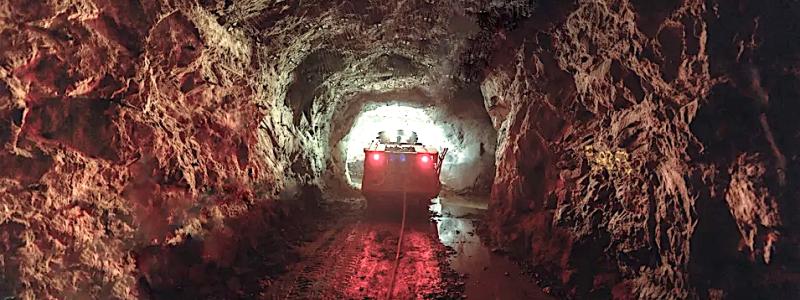
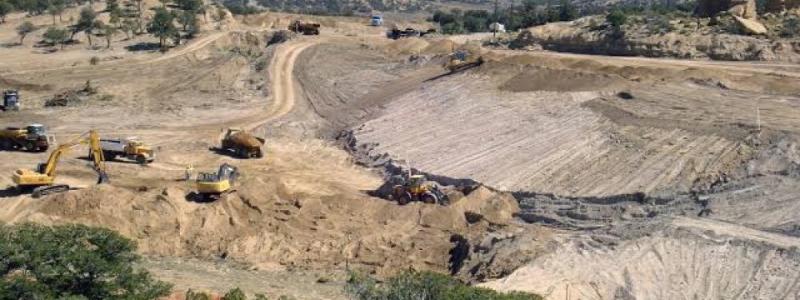
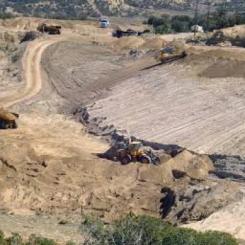
Although the arguments changed, the preferred response remained largely the same. Europe would secure a greater supply through additional suppliers, new mines, more domestic processing and increased recycling.
– Alternative ideas such as sufficiency and demand reduction have continually been pushed to the margins, says lead author Theresa Herdlitschka.
In this context, sufficiency means going beyond the goal of producing more efficiently and also asking how much material society actually needs to consume. Possible measures include extending product lifetimes, facilitating repairs and sharing, reducing the material intensity of products and directing scarce resources towards applications where they provide the greatest benefit.
EU seeks to reduce dependence on individual countries
The CRMA establishes benchmarks for the proportion of the EU’s strategic raw material needs that should be handled within Europe by 2030. At least 10 per cent should be extracted within the EU, 40 per cent processed and 25 per cent supplied through recycling.
No more than 65 per cent of the EU’s annual consumption of a strategic raw material at any relevant processing stage should come from a single non-EU country. This limit is especially important because Europe depends heavily on China across several parts of critical-metal supply chains.
According to the European Commission, all rare earth elements used in permanent magnets are currently refined in China. The country also supplies 97 per cent of the EU’s magnesium. Permanent magnets are essential components in electric motors, wind turbines, industrial robots and heat pumps.
The vulnerability affects industries throughout Europe, including Sweden’s automotive, mining-equipment, electronics, battery, fossil-free steel and defence sectors. Many companies depend on components whose raw material content is hidden several stages back in the supply chain.
Strengthening European supply could therefore reduce the threat of production stoppages and politically motivated export restrictions. The researchers do not dispute the need for more secure deliveries. Their criticism is that increasing supply is presented as the principal solution, while policies intended to limit demand are rarely treated as realistic alternatives.
The study also highlights the danger of shifting environmental damage and social consequences to mining regions outside Europe. Criticism of so-called neo-extractivism – in which economies in the Global South are primarily treated as suppliers of natural resources – has had only limited influence on EU policy, according to the researchers.
Circular economy could offer a broader approach
Recycling is already an important element of the CRMA, but a circular economy involves more than recovering metals when a product reaches the end of its useful life. Products also need to be designed so that they can be repaired, upgraded, reused and dismantled.
These measures could reduce demand for newly mined resources. Recycling alone, however, cannot satisfy a rapidly expanding market. Metals can remain tied up for decades in buildings, electricity grids, vehicles and energy infrastructure before becoming available as secondary raw materials.
The UFZ researchers therefore argue that European raw material autonomy requires a broader definition. It could include local supply chains and recycling, but also lower material use, longer product lifetimes and a discussion about which applications should receive priority.
The study also emphasises that political narratives influence which solutions are considered feasible. If the problem is primarily defined as insufficient supply, the response will be more mining and greater import diversification. If excessive and rapidly growing consumption is also recognised as part of the problem, a wider range of policy options becomes possible.
Europe consequently faces the challenge of combining 2 objectives that are often considered separately. European industry needs access to the metals required for the energy transition, digitalisation and defence. At the same time, resource use must remain within environmentally and socially sustainable limits.
Sources: Helmholtz Centre for Environmental Research, EU-Kommissionen