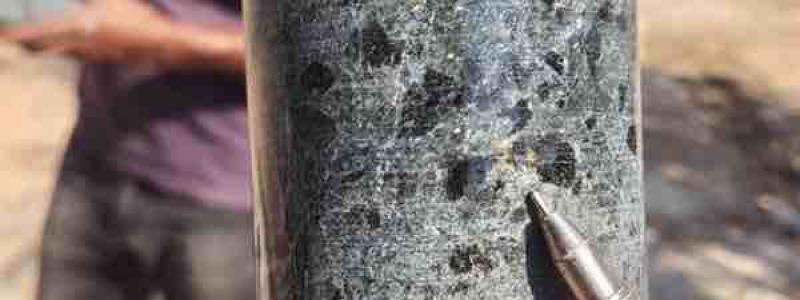

Finnish mining company Endomines has gained unexpected strategic momentum at its gold project in eastern Finland. New drilling results and technical tests indicate that Kuittila contains not only gold but also tungsten and molybdenum – two metals of growing importance to European industry and defence.
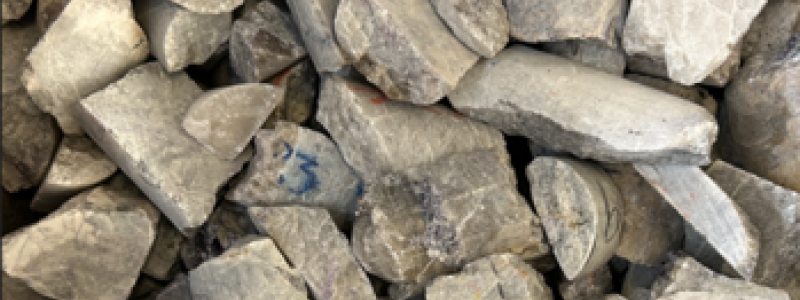
The most striking result comes from sensor-based ore sorting. The process increased the tungsten trioxide, or WO₃, grade from 0.026 per cent to 0.0815 per cent, representing a 3.1-fold improvement. The molybdenum grade simultaneously rose from 0.046 per cent to 0.1107 per cent.
The results do not prove that a tungsten operation at Kuittila would be economically viable. They do, however, demonstrate that waste rock can be removed before conventional beneficiation. Processing less material could reduce the size of the required plant, lower capital costs and cut energy consumption.
The timing is significant. According to S&P Global, the price of ammonium paratungstate, or APT, rose from USD 83 per kilogram of WO₃ in January to USD 340 in July 2026 – more than quadrupling in six months.
The price surge has coincided with tighter Chinese export controls and growing demand from Western defence manufacturers for tungsten supplies with a traceable origin.
Gold district gains a new strategic role
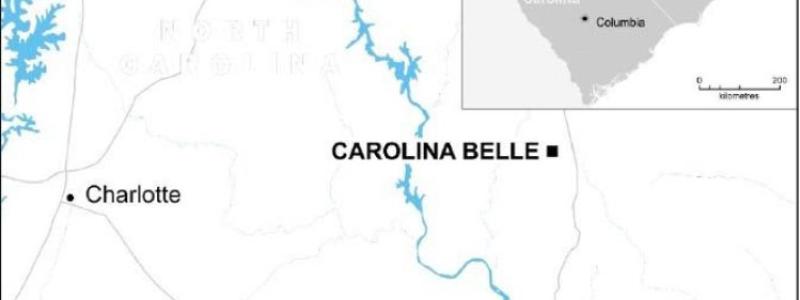
Kuittila is located approximately 25 kilometres south of Endomines’ Pampalo gold mine in Ilomantsi, North Karelia, close to Finland’s border with Russia. The project forms part of what the company calls its Southern Gold Line.
Endomines is primarily known as a gold producer. The latest results open the possibility that a future processing facility could include separate circuits for gold and tungsten, with molybdenum recovered as an additional by-product.
– We want to contribute to improving Europe’s self-sufficiency in raw materials required by the defence industry. Our objective is to begin tungsten and molybdenum production in the area alongside gold production on the Southern Gold Line, said Endomines CEO Kari Vyhtinen.
The occurrence itself is not a new discovery. The Geological Survey of Finland, GTK, identified Kuittila in 1984 while exploring the area for tungsten and molybdenum. What has changed is that Endomines is now systematically assessing the distribution of the metals and testing whether they can be economically recovered alongside gold.
Since 2023, the company has completed 118 drill holes totalling 22,783 metres at Kuittila. The 2026 programme comprises 49 holes and more than 8,800 metres of drilling. Results from 13 holes were still pending when the latest data were published.
The reported intersections include 17.8 metres grading 0.15 per cent WO₃, including one metre at 0.43 per cent. Another hole returned 16.4 metres at 0.10 per cent WO₃, including 0.95 metres at 0.48 per cent.
A further 10.2-metre interval contained 0.13 per cent WO₃, 0.08 per cent molybdenum and 1.16 grams of gold per tonne.
The results suggest that mineralisation occurs across relatively wide zones, although grades vary considerably. The tungsten is mainly hosted in scheelite, while molybdenum occurs as molybdenite in quartz veins.
Kuittila currently has a JORC-compliant inferred gold resource of 2.21 million tonnes grading an average of 1.37 grams per tonne. This corresponds to an estimated 97,490 ounces of contained gold.
Chinese dominance turns tungsten into a security issue
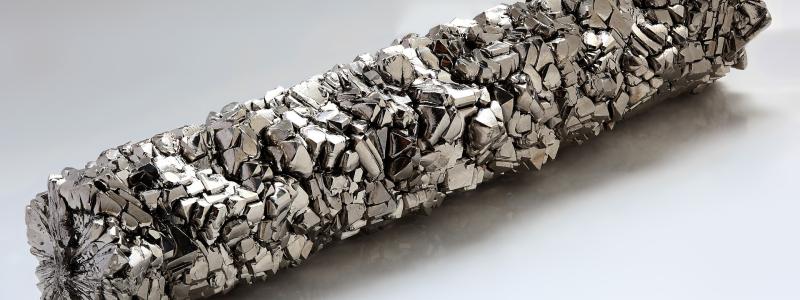
Tungsten has the highest melting point of any metal, at 3,422 degrees Celsius, and combines extreme hardness with high density. These properties make it difficult to replace in cutting tools, drilling equipment, wear-resistant components and specialised alloys.
Nearly two-thirds of demand comes from cemented carbides used in manufacturing, mining, construction and oil and gas drilling. Tungsten is also used in aerospace equipment, semiconductors, armour, ammunition and missile components.
Defence applications do not account for the largest share of global consumption, but their strategic importance makes access to the metal a national-security concern.
According to S&P Global, China controls approximately 79 per cent of global tungsten mining capacity and about 85 per cent of APT production. APT is the principal intermediate product between tungsten concentrate and finished tungsten materials. Beijing has also introduced export controls covering tungsten products.
US procurement rules are set to tighten further from 1 January 2027. American defence contractors will no longer be permitted to source tungsten metal powder and heavy tungsten alloys from China and certain other designated countries.
The restrictions are expected to increase demand for material that can be traced to mines and processing facilities in allied countries. This places Kuittila within a much broader European effort to secure strategically important supply chains.
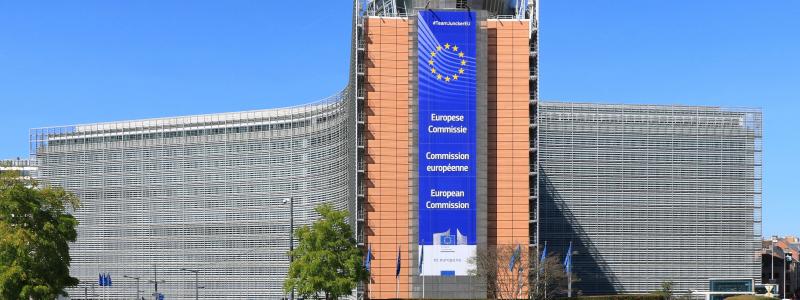
Endomines has applied for project status under the EU’s critical raw materials framework. It has also received a Finnish business development grant of up to EUR 1.51 million. Approximately EUR 960,000 is allocated to development activities and EUR 550,000 to investments.
Under the EU Critical Raw Materials Act, the bloc aims to extract at least 10 per cent of its annual consumption of strategic raw materials within the EU by 2030. No more than 65 per cent of annual consumption at any relevant processing stage should originate from a single non-EU country.
Threefold increase is promising but not yet sufficient
The dramatic percentage increase in tungsten grade comes with an important qualification. The material entering the sorting test had a very low grade of 0.026 per cent WO₃. Although sorting increased it to 0.0815 per cent, the resulting grade remains below Endomines’ long-term target.
The company ultimately wants pre-concentration and ore sorting to increase the tungsten grade by more than four times. Its target is to deliver material grading approximately 0.20–0.40 per cent WO₃ to the processing plant, a range that Endomines says is comparable with the feed grades of several open-pit tungsten mines.
The next stage will involve larger ore-sorting tests using material with a higher initial tungsten grade. The sorted product will then undergo gravity separation and flotation, with the aim of producing a saleable concentrate containing more than 32 per cent WO₃.
Only larger and more representative tests can establish how much tungsten can be recovered, how much waste rock can be rejected and what the process would cost at commercial scale.
Endomines has not yet published a separate tungsten mineral resource, expected production volume, capital-cost estimate or economic feasibility study. The existing JORC resource at Kuittila applies only to gold and remains in the inferred category, the least geologically certain mineral-resource classification.
The breakthrough is therefore not that Finland suddenly has a production-ready tungsten mine. It is that an existing gold development could acquire a second economic and strategic function.
If tungsten, molybdenum and gold can be recovered through an integrated processing operation, the additional products could strengthen the project economics in a way that may not be possible for a stand-alone tungsten mine.
Development work will continue during 2026 and 2027. Endomines plans approximately 3,000 metres of follow-up drilling to determine the extent of the mineralised system and a further 2,500 metres of early-stage exploration drilling farther south.
Only after that work will it become clearer whether Kuittila is merely an interesting polymetallic occurrence – or the beginning of a new European tungsten supply chain.
Facts: Why tungsten is considered critical
- Chemical symbol: W.
- Melting point: 3,422 degrees Celsius, the highest of any metal.
- Used in cemented-carbide tools, drilling equipment, specialised steels, electronics, aerospace components, armour and ammunition.
- China controls about 79 per cent of global mining capacity and 85 per cent of APT production.
- Global demand is forecast by S&P Global to increase by approximately 10 per cent between 2026 and 2030.
- Recycled tungsten supplies around 35 per cent of global demand.
Sources: Endomines’ results announcement of 11 August 2026, S&P Global, the European Commission and the Council of the European Union.