

Kiruna Municipality has approved a new cooperation agreement with the Swedish state-owned mining company LKAB aimed at securing funding for the next phase of the city's ongoing relocation project. While the agreement provides a financial solution for one of Europe's largest urban transformation projects, it has also triggered debate over the future independence of the municipality.
Earlier this year, Kiruna announced that it faced a funding shortfall of approximately SEK 1.8 billion needed to continue the next stage of relocating the city centre, which is being moved due to ground deformation caused by underground iron ore mining.
LKAB Steps In with Major Investment
According to reports by Sveriges Television, LKAB has offered to finance a substantial part of the missing funds.
The company plans to invest around SEK 1.1 billion while assuming greater responsibility for several infrastructure and construction projects linked to the city's continued development.
As part of the agreement, LKAB will also acquire land and properties required for future relocation phases.
Kiruna is widely regarded as one of the world's largest and most complex urban relocation projects, with large parts of the city centre gradually being moved three to six kilometres eastward to allow continued access to one of Europe's richest iron ore deposits.
Municipal Officials Raise Concerns
Although the agreement addresses the municipality's immediate financial challenges, several senior municipal officials have expressed concern about its long-term implications.
A joint statement issued by the municipal planning department and the environmental and building authority warns that the agreement could transfer significant influence and decision-making power from the municipality to the mining company.
According to the officials, the arrangement may affect municipal self-governance, long-term urban planning responsibilities and the municipality's ability to shape Kiruna's future development independently.
The situation illustrates the unusual circumstances created when a single industrial company effectively finances a large share of an entire city's redevelopment.
Narrow Political Approval
The agreement was debated during an extended session of the Kiruna Municipal Council.
Representatives from left-wing parties, the Centre Party and a regional healthcare party sought to return the proposal for further review. However, the motion failed by just one vote, allowing the agreement between Kiruna Municipality and LKAB to be formally approved.
A Relocation Project Without Parallel
Kiruna's urban transformation is considered unique on a global scale.
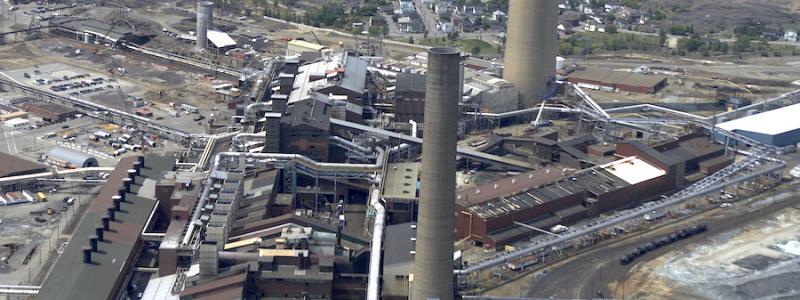
Since the early 2000s, thousands of homes, public buildings, roads and utility systems have gradually been relocated to make way for the continued expansion of LKAB's underground mining operations.
One of the project's most internationally recognised milestones was the relocation of Kiruna Church in 2025, an operation that attracted worldwide media attention.
As the project progresses, however, overall relocation costs continue to increase, making long-term financing one of the municipality's most challenging political issues.
Balancing Economic Development and Local Democracy
The new agreement highlights the complex relationship between Kiruna and LKAB.
The mining company is both the region's largest employer and its primary economic engine, while its continued mining activities make the city's relocation unavoidable.
Many observers believe the next stages of the project will depend on finding a balance that secures long-term economic development without weakening municipal autonomy.
How that balance is achieved is expected to remain one of the defining issues as Kiruna's historic transformation continues.
Fact Box: The Kiruna Relocation Project
- The relocation is necessary because of ground deformation caused by LKAB's underground iron ore mining.
- Large sections of the city centre are being moved 3–6 kilometres east.
- The transformation has been underway for more than two decades.
- Kiruna Church was relocated to its new site in 2025.
- The municipality previously estimated it needed approximately SEK 1.8 billion to finance the next phase of the project.
Sources: Sveriges Television, Yle and Kiruna Municipality.