



An American technology company aims to establish the world's oceans as a new source of uranium for nuclear power generation. Supercritical Materials has secured an exclusive licence for technology that extracts dissolved uranium from seawater using specially treated fibres. The company is targeting its first industrial-scale facility by 2033, although it must still demonstrate that the process can operate economically on a commercial scale.
World Nuclear News reported the development on 22 October 2026 following an interview with Canon Bryan, founder and CEO of Supercritical Materials.
The technology was originally developed by the US Department of Energy's Pacific Northwest National Laboratory in collaboration with research partners.
The world's oceans contain enormous quantities of dissolved uranium. However, its concentration is extremely low, averaging approximately 3.3 micrograms per litre of seawater.
This means that very large volumes of water must come into contact with the extraction material to recover commercially useful quantities.
Special fibres capture dissolved uranium
The process uses specially developed fibres treated with chemicals that bind uranium ions dissolved in seawater.
The fibres are placed in the ocean, where they gradually accumulate uranium. After sufficient exposure, they are removed and chemically processed to recover the captured material.
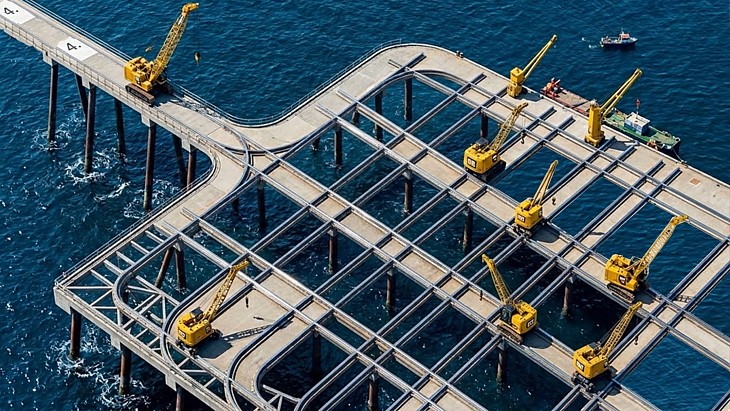
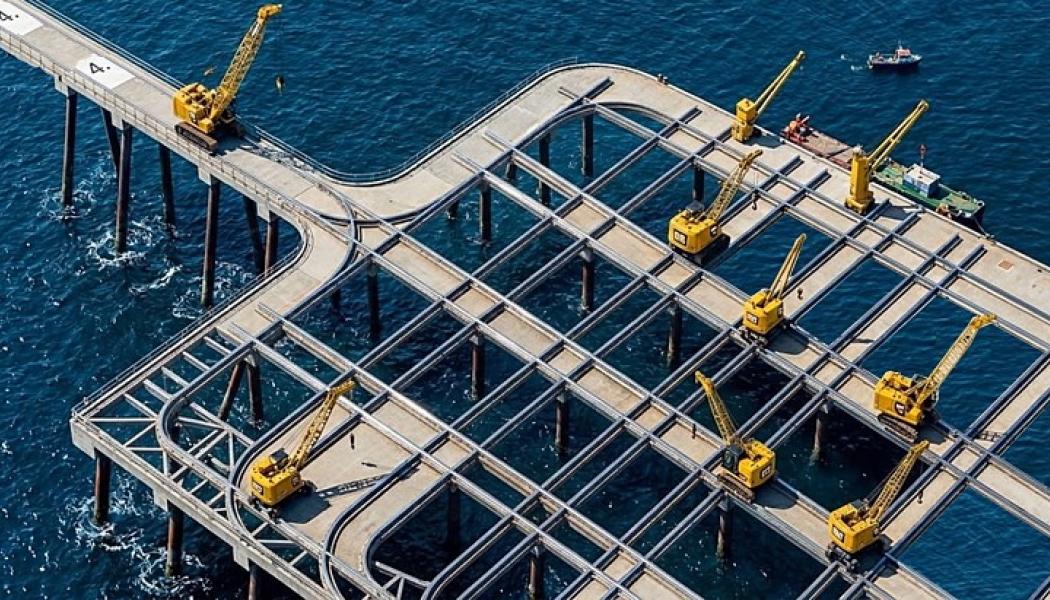
Supercritical Materials plans to deploy the technology on pier-like structures in the Gulf of Mexico, where natural ocean currents would continuously bring seawater into contact with the fibres.
According to the company, warmer seawater improves uranium recovery efficiency.
The proposed industrial facility would use approximately 10,000 tonnes of fibres annually, exposing them to an estimated 250 cubic kilometres of seawater.
The target is to recover 1.85 million pounds of uranium per year, equivalent to approximately 840 tonnes.
The company believes this approach could eventually provide an alternative to conventional uranium mining.
Commercial viability remains unproven
According to Canon Bryan, preliminary economic assessments suggest that uranium could be recovered from seawater at costs competitive with current market prices.
However, these estimates remain projections rather than independently verified commercial results.
The underlying technology has already demonstrated uranium recovery at an experimental scale, but substantial engineering challenges remain.
The main difficulty is developing an extraction system capable of handling the enormous quantities of seawater and specialised fibres required for industrial production.
Supercritical Materials plans to complete further technical and economic studies before reaching a final investment decision, currently targeted for 2029.
Its first commercial-scale facility is scheduled for 2033, provided the necessary technical, financial and regulatory conditions can be met.
If successful, the technology could eventually reduce the nuclear industry's dependence on conventional uranium mines and geographically concentrated supply chains.
It could also provide an additional long-term source of nuclear fuel as countries consider expanding their nuclear generating capacity.
Nevertheless, further testing and detailed economic assessments will be required before uranium extraction from seawater can become a commercially established industry.
Sources: World Nuclear News, 22 October 2026; Supercritical Materials, technical project information and announcements published between July and September 2026; Pacific Northwest National Laboratory, research on uranium extraction from seawater.