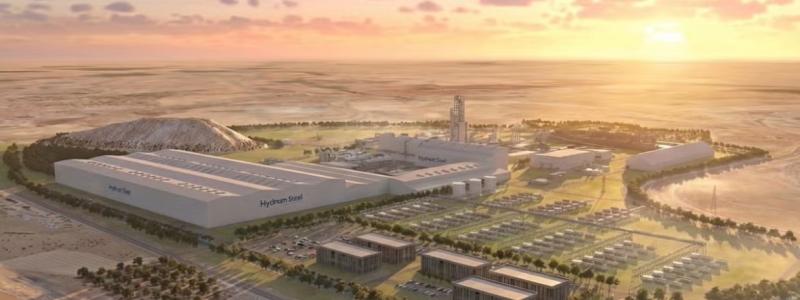
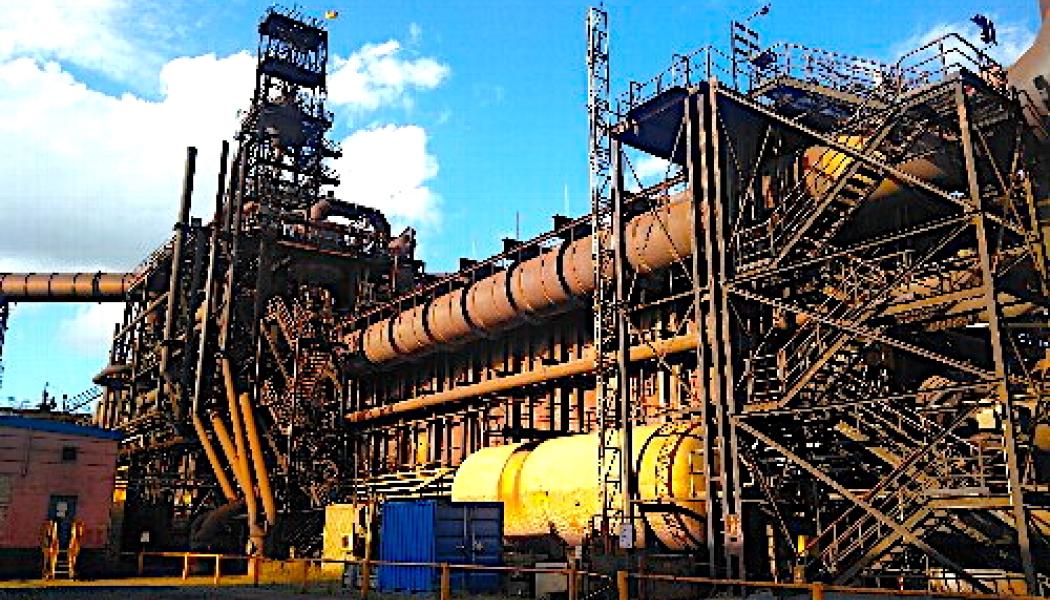
Energy company Moeve and steel producer ArcelorMittal are launching a joint platform to develop the use of renewable hydrogen and other lower-emission fuels in steel production. The initiative will combine private and public funding to move new technologies from research to industrial demonstration.
The new platform forms part of the companies’ Green Molecules to Green Steel alliance, known as G2G, and will be jointly owned by the two groups. Its purpose is to develop, scale up and deploy technologies capable of reducing emissions from the steel industry.
According to ArcelorMittal, the partnership will initially focus on industrial demonstration projects. Technologies that prove successful could subsequently be scaled up and introduced at the companies’ production facilities.
In addition to renewable hydrogen and hydrogen derivatives, the work will cover biogas, biomethane and second-generation biofuels. The partners have not yet disclosed which technologies will be demonstrated first, how much will be invested or when the trials will begin.
Public-sector organisations join the initiative
The regional agency Sekuens, which is responsible for science, business competitiveness and innovation in Asturias, will participate through existing and future mechanisms supporting innovation in the northern Spanish region.
Asturias has a long industrial history and has been an important centre for coal mining, energy production and the metals industry. The region is now attempting to transform its economy while preserving employment and industrial competitiveness.
According to ArcelorMittal, the platform may also be opened to other public-sector organisations and private companies, provided that their activities are consistent with its objectives and structure.
The ambition is to bring together energy producers, steelmakers, research organisations and public funding bodies. Through this cooperation, the partners hope to address several of the obstacles that have so far slowed the transformation of Europe’s steel industry.
One of the main challenges is securing large volumes of fossil-free electricity and renewable hydrogen at competitive prices. New production processes, substantial investment and long-term customers willing to pay more for steel with a lower carbon footprint will also be required.
– We need to continue exploring technologies that will allow us to achieve environmentally and economically sustainable production, and we must achieve this as soon as possible, said Pinakin Chaubal, Chief Technology Officer at ArcelorMittal.
He pointed out that ArcelorMittal operates major research and development centres around the world, particularly in Spain. The challenge is nevertheless so complex that no individual company can solve it alone.
– Now more than ever, we need to work on collaborative innovation models, of which this platform is an excellent example, Chaubal said.
Costs have slowed previous projects
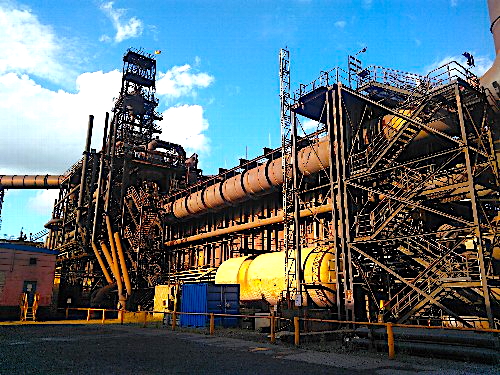
Steel production accounts for a significant share of global industrial carbon dioxide emissions. Conventional blast furnaces use coal both as an energy source and as a reducing agent to remove oxygen from iron ore. One possible alternative is to produce direct reduced iron using hydrogen and subsequently process the material in electric arc furnaces.
If the hydrogen is produced using fossil-free electricity, emissions can be reduced substantially. The competitiveness of the technology depends, however, on factors including electricity prices, electrolyser costs, the availability of suitable iron ore and access to financing for new plants.
ArcelorMittal’s previous plans in Germany illustrate how difficult it can be to make such projects commercially viable. The group had been awarded a total of EUR 1.3 billion in support from the German federal government and regional authorities for a hydrogen-based direct reduced iron plant and three electric arc furnaces at two steelworks.
Despite the approved support, the company decided to cancel the projects. According to ArcelorMittal, the economic conditions were not sufficient to justify the investments on a commercial basis.
The new G2G platform does not therefore constitute a decision to build a full-scale production facility. It is instead intended to test technologies and reduce technical and financial risks before larger investments are made.
Alliance aims to strengthen European energy independence
Moeve, formerly known as Cepsa, has its origins in the oil and gas industry but is seeking to expand its activities in renewable energy and lower-emission fuels. The company sees the cooperation as an opportunity to connect its energy projects with industrial demand for hydrogen, biomethane and other clean molecules.
– This alliance strengthens the collaboration between two major global companies committed to innovation, decarbonisation and the competitiveness of Europe, said Moeve CEO Maarten Wetselaar.
He described the platform as a tool for developing new solutions while advancing Europe’s energy independence. Moeve says that it aims to take a leading role in the energy transition through investments and new projects.
The alliance is being launched as Europe’s energy-intensive industries face high costs, fierce international competition and growing pressure to reduce emissions. For the steel industry, the transition is therefore not only about making new technologies work. They must also be capable of producing steel at prices that customers are willing to accept.
Moeve and ArcelorMittal hope that a combination of corporate resources, public funding and joint technology development will make it possible to move promising solutions more rapidly from laboratories and pilot projects into industrial operation.
Sources: ArcelorMittal, Moeve and Hydrogen Insight.