


German manufacturers underestimate the risk that shortages of critical raw materials could halt production, according to Boston Consulting Group. After China restricted tungsten exports, the price of a key intermediate product rose by about 500 per cent, putting pressure on cutting tool manufacturers.
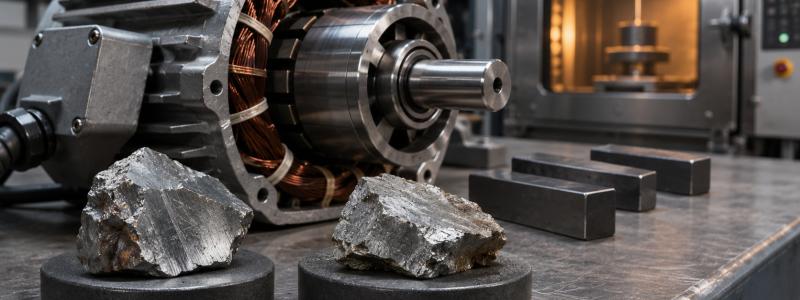
Many companies assess their exposure by looking at direct suppliers and purchasing costs, according to the analysis, reviewed by German business daily Handelsblatt. That can leave them overlooking the materials in motors, sensors and semiconductors, as well as in the tools used to make those components. Tungsten, for example, is used in cemented carbide tools that machine a wide range of industrial parts.
Small markets underpin high-value products
BCG estimates that the global gallium market is worth less than $350 million a year, while the finished products that depend on the metal are worth an estimated $3.5 trillion. Gallium is used in high-performance semiconductors for communications equipment and AI systems.
Electrification, AI and defence investment are driving up demand for several critical raw materials. By 2040, BCG estimates that demand for some of these materials could reach between 120 and 250 per cent of projected supply.
Chinese firms control much of the processing capacity
China accounts for around 2 per cent of global cobalt mining capacity, while Chinese owners control 47 per cent of global cobalt processing capacity, according to BCG. For nickel, 31 per cent of refining capacity is located in China, while Chinese owners control 76 per cent worldwide. A manufacturer buying from a supplier outside China can therefore still depend on Chinese-owned processors.
– A few kilograms of a critical raw material can determine whether an entire production line keeps running, Sebastian Kihm, chief operating officer for trading at raw materials supplier TK Accelis, told Handelsblatt.
German engineering industry association VDMA is also monitoring supplies of cobalt and synthetic diamonds. It warns of further supply disruptions and price increases if China brings its postponed export restrictions on products including diamond powder and diamond grinding wheels into effect in January 2027.
Public funding is slow to reach projects
Companies are building stockpiles, expanding recycling and signing long-term contracts with more suppliers. Those agreements can help new mines secure financing, but buyers must commit early and may have to accept higher costs.
Public financing commitments for critical raw materials in industrialised countries reached around $65 billion in 2025, more than four times the 2023 figure, according to BCG. Much of the announced funding had yet to be deployed when the analysis was conducted. By the end of September, German development bank KfW’s raw materials fund had committed the equivalent of $224 million, about a fifth of its original capital. The commitments covered Vulcan’s lithium project and Arafura’s rare earths project.
Source: Handelsblatt