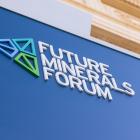
Germany’s steel industry is warning of sharply rising electricity costs if government support for grid charges is reduced. At the same time, the industry association Wirtschaftsvereinigung Stahl, WV Stahl, is calling for stronger EU rules to support low-carbon steel produced in Europe.
According to Germany’s four major transmission system operators – 50Hertz, Amprion, TenneT Germany and TransnetBW – grid charges are expected to rise by more than 20 per cent in 2027.
WV Stahl is therefore urging the federal government to maintain financial support for network costs. In 2026, EUR 6.5 billion was allocated to help reduce these charges.
The association argues that high electricity prices are already weakening the international competitiveness of German industry. A reduction in support would, according to WV Stahl, again raise costs for companies with particularly high electricity consumption.
Calls for stronger protection for European steel
At the same time, WV Stahl is pressing for changes to the EU’s planned Industrial Accelerator Act, IAA. The legislation is intended, among other things, to create more predictable markets for climate-friendly industrial products and support investment through public procurement.
WV Stahl wants public support schemes and procurement rules to be more closely linked to low-carbon steel that has actually been melted and cast in the EU or EFTA.
The association is also calling for gradually higher minimum shares of so-called green steel in publicly supported projects, together with a common and legally binding EU definition of steel origin.
In addition, WV Stahl proposes that the permitted price premium for European low-carbon steel should be raised to 40 per cent and assessed based on the total project cost.
According to the association, the competitiveness of the European steel industry will depend on two parallel measures: more stable energy costs in Germany and stronger demand for low-carbon steel produced in Europe.
WV Stahl has previously warned against reducing energy support under Germany’s Climate and Transformation Fund, KTF, from 2027.
Source: Wirtschaftsvereinigung Stahl, GMK Center.