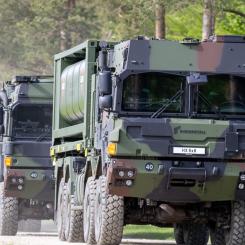


Drones, missiles, radar systems and military communications equipment require many of the same critical metals used in electric vehicles, solar panels, semiconductors and other advanced technologies. The difference is that materials in destroyed weapons are often dispersed, making their recovery technically difficult or economically unviable.
The issue is raised in an analysis published by Resource Insights and subsequently reported by energy media. The author warns that military expansion could increase demand for already scarce materials while making the transition towards a more circular economy more difficult.
Modern weapons consume metals that may never be recovered
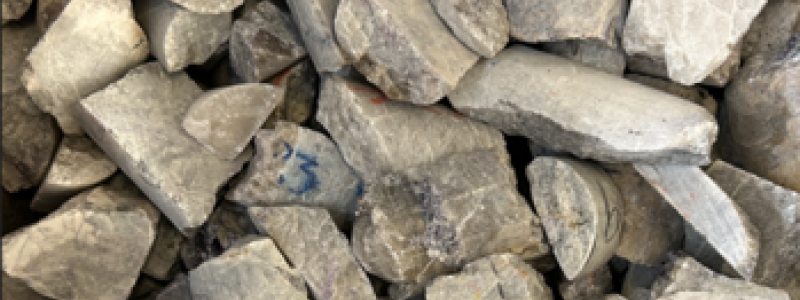
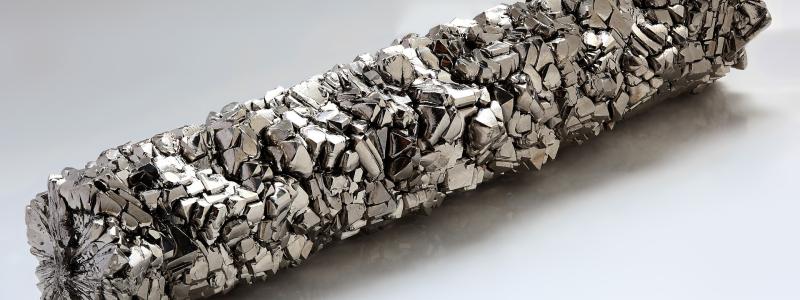
Germanium is highlighted as one example. Its properties make it important for infrared optics, night-vision equipment, guidance systems, fibre optics and certain semiconductors. It is also used in solar technology, scientific instruments, medical equipment and advanced vehicle systems.
The US Geological Survey, USGS, classifies germanium as a critical mineral. It is mainly recovered as a by-product of zinc ore processing, meaning that production cannot be increased rapidly in response to a higher germanium price alone.
Claim about drone consumption remains unverified
One widely circulated estimate claims that drone warfare in Ukraine consumes around 4 per cent of global germanium demand. The supporting data have not been verified sufficiently, and the figure should therefore not be presented as a fact.
It is nevertheless well documented that germanium is used in several military systems. Infrared sensors incorporating germanium-based optics may be found in thermal cameras, night-vision equipment and guidance systems for precision weapons, according to the USGS.
When a civilian product reaches the end of its useful life, it can potentially be collected, dismantled and recycled. If a weapon explodes, however, its metals may be fragmented, contaminated or scattered over a large area.
Military equipment left on a battlefield may also be too dangerous or expensive to recover. Small quantities of speciality metals contained in damaged electronics and optical systems are particularly difficult to separate.
This does not mean that all materials in every destroyed weapons system are automatically lost. Larger components and vehicles can sometimes be recovered and recycled. The prospects are significantly poorer for metals dispersed by an explosion.
The same problem applies to other strategic materials used in modern defence technologies. Gallium is used in advanced semiconductors and radar systems, rare earth elements in magnets and sensors, and cobalt, nickel and graphite in batteries.
These materials also have extensive civilian applications. The defence sector consequently competes with the energy, electronics and automotive industries for some of the same limited material flows.
Extraction cannot accelerate indefinitely
The analysis refers to Romanian economist Nicholas Georgescu-Roegen, who linked economic resource use to the thermodynamic concept of entropy.
The central idea is that metals are not physically destroyed but gradually become dispersed, mixed and contaminated until recovering them requires an unreasonable amount of energy or other resources.
Even well-functioning recycling systems cannot return 100 per cent of a material to production. Losses occur during collection, sorting, processing and the manufacture of new products.
This makes the rapid growth of mineral extraction problematic over the longer term. According to data cited in the analysis, half of all copper extracted worldwide by 2018 was mined during the relatively short period between 2000 and 2018.
Repeating such a doubling becomes more difficult as the most accessible deposits are depleted. Declining ore grades mean that larger amounts of rock must be mined, crushed and processed to produce the same quantity of metal.
This increases demand for energy, water, machinery and land. New mining projects also face lengthy permitting processes and potential conflicts involving local communities, environmental values and Indigenous rights.
According to the historical figures cited in the analysis, lithium extraction increased by 2,539 percent between 1970 and 2022. Increasing the extraction rate by another factor of 25 over the coming decades would require an enormous expansion of mining and processing capacity.
Such historical comparisons are not forecasts. New deposits, improved technology, alternative materials and changing demand could all affect future development. They nevertheless demonstrate that exponential growth in physical resource extraction cannot continue indefinitely.
China dominates a sensitive supply chain
Supply risks are intensified because the extraction and, especially, processing of several critical minerals are concentrated in a small number of countries. China holds a particularly strong position in germanium, gallium, graphite and rare earth elements.
Chinese export restrictions on germanium and gallium have already created uncertainty for companies in the United States and Europe. Both metals have civilian and military uses, making their trade part of the broader technological rivalry between China and Western countries, according to the Stockholm International Peace Research Institute (SIPRI.
The United States and other Western countries are therefore attempting to open new mines, build processing facilities and establish strategic reserves. New supply chains, however, take many years to develop and do not solve the problem of materials being lost after use.
A more durable strategy would need to combine new production with better collection, products designed for disassembly, more efficient material use and the development of substitutes.
Military equipment that is not destroyed could also be covered by clearer systems for recovery, dismantling and recycling. Material losses caused by warfare can only partly be addressed through technology.
The greater the number of advanced weapons deployed, the larger the amount of processed material that risks being dispersed in forms that can no longer be used.
The analysis concludes that competition for strategic metals is not solely about who controls mines and processing facilities. It is equally important to consider how long materials remain in use and how much can eventually be returned to the economy.
Sources: Resource Insights, US Geological Survey, Stockholm International Peace Research Institute and SFA Oxford. The claim that drone warfare in Ukraine accounts for 4 per cent of global germanium demand has not been independently verified and is not treated as established fact.