
The University of Rochester has developed a method that could fundamentally change how metals behave in water. By etching microscopic and nanometer-scale structures into the surface, the material becomes highly water-repellent.
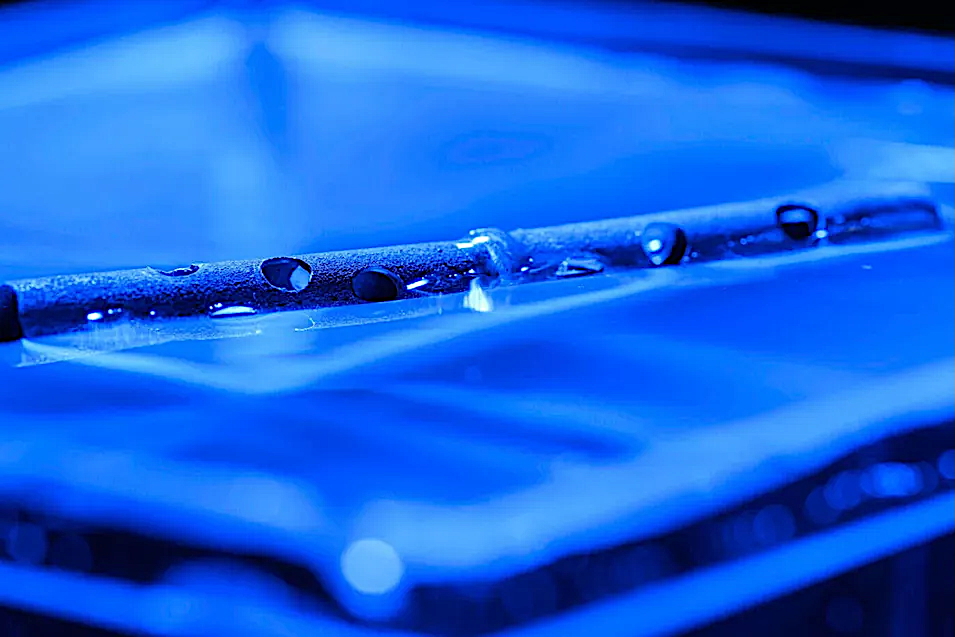
Instead of allowing water to penetrate, the treated surface traps a thin layer of air. This prevents direct contact between the metal and water, enabling buoyancy that is normally impossible for dense materials.
Microstructures repel water at an extreme level
– The metal repels water so effectively that it can remain afloat even when damaged, the researchers state.
Remains afloat despite drilled holes
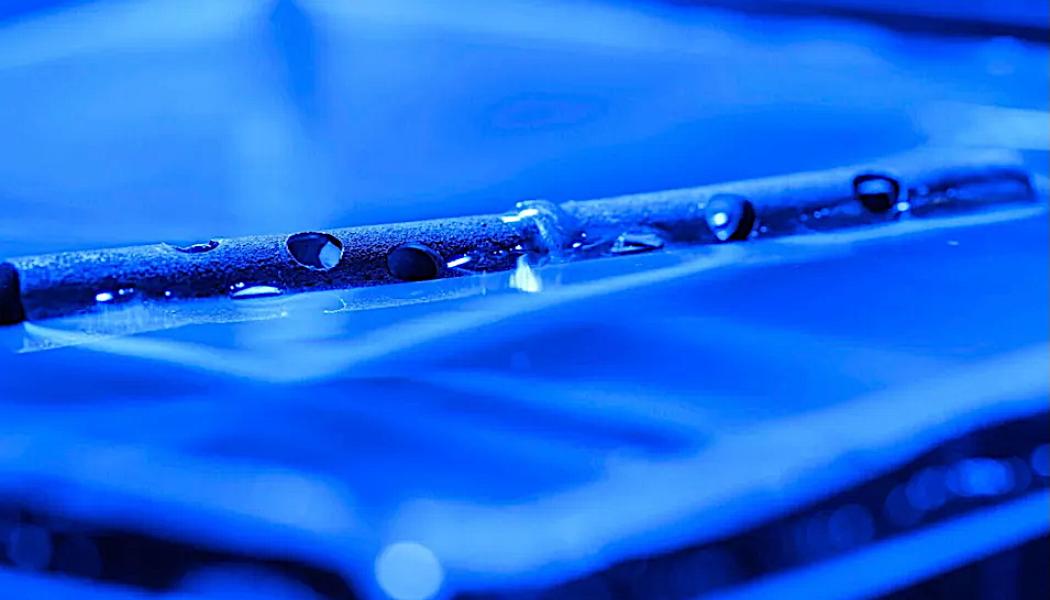
One of the most striking findings is that the metal retains its buoyancy even after being perforated. In laboratory tests, researchers drilled holes into the structures without causing them to sink.
This challenges conventional expectations. Normally, damaged metal objects quickly fill with water and lose their ability to float. Here, the engineered surface prevents water from entering in the same way.
The approach builds on so-called superhydrophobic surfaces, but extends the concept by applying it directly to durable metal components rather than coatings alone.
Potential uses – but challenges remain
The researchers highlight several possible applications, particularly in maritime engineering and floating infrastructure. The material could, for example, be used in ship hulls, floating platforms or safety equipment.
However, significant obstacles remain before large-scale deployment becomes feasible. The manufacturing process is complex and may prove costly, especially for large surfaces. Durability is another concern, as the structures must withstand mechanical stress, wear and harsh environments over time.
The technology is still at the research stage, and its commercial viability remains uncertain. Previous attempts with similar surface treatments have struggled with a limited lifespan when exposed to dirt, abrasion and chemical conditions.
Source: University of Rochester