
Demand for battery metals used in electric vehicles continued to grow in 2025 despite sharp price declines in many raw materials over the past few years. The value of key battery metals contained in EV batteries reached about $15.6bn globally last year.
The figures come from an analysis by Toronto-based supply-chain advisory firm Adamas Intelligence, which tracks the flow of raw materials into electric vehicle production.
The metals included in the estimate are lithium, graphite, nickel, cobalt and manganese – core materials used in most EV battery chemistries.
At the same time, global installed battery capacity for electric vehicles surpassed 1 terawatt-hour for the first time in a calendar year. Installed battery capacity is widely considered a better indicator of battery material demand than vehicle sales alone.
The global passenger EV market – including battery electric vehicles, plug-in hybrids and conventional hybrids – reached just under 30 million vehicles in 2025. That represented an 18 per cent increase compared with the previous year.
Measured in deployed battery capacity, the market expanded even faster, rising by 22 per cent.
Rapid expansion of the battery market
Growth in the EV battery market has accelerated dramatically in recent years. In 2021, global installed battery capacity amounted to around 286 gigawatt-hours.
Within four years, the market has therefore nearly quadrupled.
Compared with 2019, the global battery market measured in gigawatt-hours is now roughly ten times larger, despite the pandemic and major disruptions to global supply chains during that period.
Even with this growth, the value of battery metals remains far below the exceptional levels reached in 2022 when raw material prices surged.
However, the outlook for battery metal suppliers appears to be improving again. According to the analysis, rising lithium and nickel prices are expected to filter through the supply chain during 2026 while cobalt prices remain elevated.
It is also worth noting that the estimated $15.6bn only reflects the metals contained in finished batteries. Losses during refining, chemical conversion and battery manufacturing are not included, meaning that the total raw material demand and revenues at earlier stages of the supply chain are significantly higher.
Battery chemistry shifts reshape demand
Demand for individual battery metals is increasingly influenced by changes in battery chemistry.
Lithium and graphite remain essential components in nearly all EV batteries. However, automakers are steadily reducing the use of cobalt in nickel-cobalt-manganese and nickel-cobalt-aluminium batteries.
At the same time, lithium-iron-phosphate batteries, known as LFP, have expanded rapidly.
In 2025, LFP battery packs accounted for nearly half of global battery capacity deployed in electric vehicles.
Chemistry dominates in China, where it is now used in around 70 per cent of EVs.
In Europe and North America, however, high-nickel battery chemistries remain common. These typically contain more than 60 per cent nickel and often exceed 80 per cent.
Volkswagen becomes the largest buyer of battery metals
The analysis also highlights significant differences among automakers in their use of battery metals.
The Volkswagen Group – which includes brands such as Audi, Porsche and Škoda – became the world’s largest buyer of EV battery metals in 2025.
Average raw material costs amounted to about $1,624 per battery electric vehicle.
A large share of the spending relates to battery chemistries with relatively high nickel and cobalt content.
At the same time, Volkswagen is working to introduce lower-cost battery technologies. Its battery subsidiary Powerco has commissioned a plant in Germany and is building another facility in Spain aimed at producing LFP batteries.
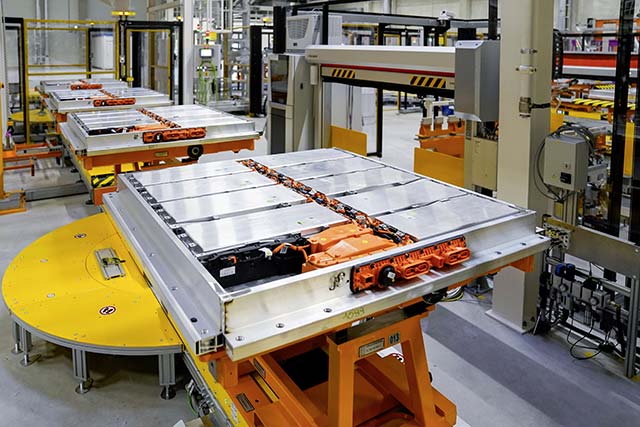
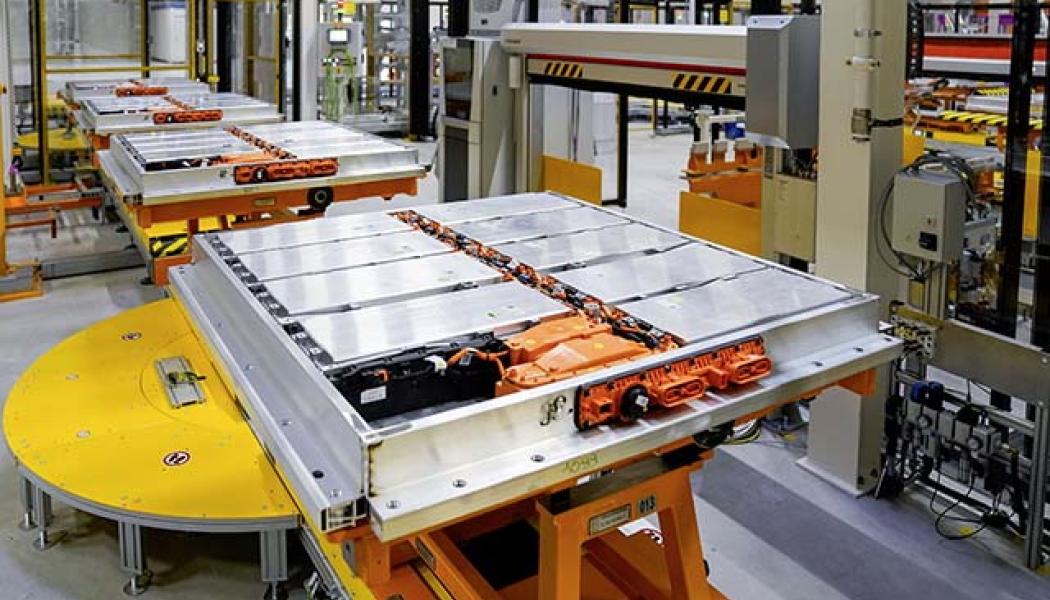
At Volkswagen Group Components’ plant in Braunschweig, production of battery systems for the company’s latest electric vehicles is currently being ramped up.
General Motors recorded even higher average battery metal costs – about $1,664 per EV. Much of its battery supply comes from the Ultium joint venture with LG Energy Solution.
The US automaker is now considering broader adoption of LFP batteries in an effort to reduce costs.
Wide cost gap between automakers
The analysis reveals a substantial gap in battery metal spending between different manufacturers.
Chinese automaker BYD sells more electric vehicles than Tesla but has significantly lower material costs per vehicle. BYD relies almost entirely on LFP batteries and sells a large number of plug-in hybrids.
The average battery metal cost for BYD vehicles was about $247 per car, compared with $1,082 for Tesla.
Toyota sits at the opposite end of the spectrum. The Japanese manufacturer focuses primarily on conventional hybrid vehicles that use relatively small batteries, often nickel-metal-hydride.
In 2025, Toyota spent an average of just $185 per electrified vehicle on battery metals.
This indicates that older hybrid technologies still represent a meaningful source of demand for certain battery metals, particularly nickel and some rare earth elements.
Source: The Northern Miner, Adamas Intelligence
Fact check:
Adamas Intelligence is a Toronto-based research firm specialising in EV supply chains and battery materials. The company tracks global demand for lithium, nickel, cobalt, graphite and manganese used in electric vehicle batteries.