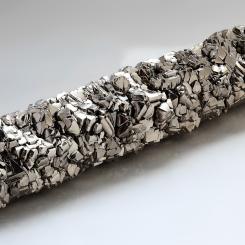


Copper prices recently climbed above 13 000 dollars per ton before retreating to around 12 700 dollars, as rising inventories in the United States and China and signs of short-term oversupply weighed on the market. The development suggests that copper is unlikely to follow gold’s rally in the near term, even though the metal remains central to electrification and power-grid investments worldwide. The figures were reported by Oilprice.com.
Analysts still point to strong long-term demand expectations tied to electrification, data centres and infrastructure. However, short-term conditions have shifted as warehouses fill and demand softens, particularly in China.
– Even though we expect gold prices to rise further in the long term, we see more differentiated returns across the commodities sector in our base case, Goldman Sachs analysts wrote in a note cited by the South China Morning Post, according to the original report.
Large inventories weigh on prices
The recent price rally slowed as inventories at major trading hubs in the US and China rose sharply. Demand in China also weakened ahead of the Lunar New Year, when industrial activity and trade typically slow.
– Rising visible inventories, weaker Chinese demand ahead of the holidays and a contango between spot and three-month prices in London signal ample short-term supply, countering copper’s appeal as a long-term investment theme driven by electrification, AI data centres, electric vehicles and cooling infrastructure, wrote Ole Hansen, commodity strategist at Saxo Bank, in an analysis cited by the original article.
– While the long-term story remains supportive, the short-term rally may stay capped until demand signals return after the holidays.
Chinese markets were closed for more than a week until 23 February for the New Year break, further dampening trading.
Speculation adds volatility
Speculative positions in base metals reached record levels on the Shanghai Futures Exchange in late 2025 and early 2026. Investors placed large bets on rising prices in copper as well as zinc, nickel and aluminium. A significant share of these positions came from retail investors, contributing to sharp price swings.
Analysts say fundamentals still matter, but market positioning and momentum have become more influential.
– “Fundamentals still matter, but this shift means positioning and momentum play a larger role, leading to more volatility,” ING commodity strategist Ewa Manthey said, according to the original article.
China has increasingly become the centre of short-term price formation in metals markets, amplifying global fluctuations.
Tariff threats and weaker demand
The prospect of US tariffs on refined copper has also affected sentiment. Deutsche Bank says such tariffs could redirect metal flows toward the US, while Chinese demand has weakened since the third quarter of 2025.
– The threat of US tariffs on refined copper is expected to lead to continued metal flows to the US, but copper demand in China has weakened significantly since the third quarter of 2025, with high prices acting as a headwind for short-term domestic demand, Deutsche Bank analysts wrote, according to the original article.
The bank forecasts an average copper price of 12 125 dollars per ton in 2026 and a potential peak near 13 000 dollars per ton in the second quarter as demand recovers after the holidays.
Inventories at major trading venues have meanwhile surpassed one million tons for the first time since 2003.
– The significant correction from January’s record is mainly driven by long positions being unwound while inventories continue to rise, Saxo Bank’s Hansen said, according to the original article.
Goldman Sachs also expects prices to fall later in the year once uncertainty around US tariffs becomes clearer. The bank’s base case is a tariff of 15 per cent announced in 2026 and implemented in 2027. When that uncertainty fades, investors may refocus on the risk of global oversupply, which could put further pressure on prices.
Copper remains crucial for power grids, electronics and transport systems. Yet large price swings, rising inventories and uneven demand mean the market is likely to remain volatile in the near term, despite long-term projections of growing consumption.
Sources: Oilprice.com, with quotes from Goldman Sachs, Saxo Bank, ING and Deutsche Bank